


Rosselkhoznadzor will inspect Armenian companies due to suspected violations in fish product supplies
15.05.2026,
18:36
Sergey Dankvert, head of Rosselkhoznadzor, and Tigran Petrosyan, head of the Food Safety Inspectorate of Armenia, discussed cooperation between Armenian and Russian regulators and compliance with requirements for the supply of Armenian plant and livestock products to the Russian market.
YEREVAN, May 15. /ARKA/. Sergey Dankvert, head of Rosselkhoznadzor, and Tigran Petrosyan, head of the Food Safety Inspectorate of Armenia, discussed cooperation between Armenian and Russian regulators and compliance with requirements for the supply of Armenian plant and livestock products to the Russian market.
"Rosselkhoznadzor will inspect enterprises whose supplies to Russia were suspended due to suspected imports of counterfeit fish products, presumably of European origin," the Russian regulator stated in a statement.
It is noted that a preliminary inspection and analysis of materials, including photographs, of the imported rainbow trout raised doubts in Rosselkhoznadzor regarding the origin of the raw materials used to produce the products.
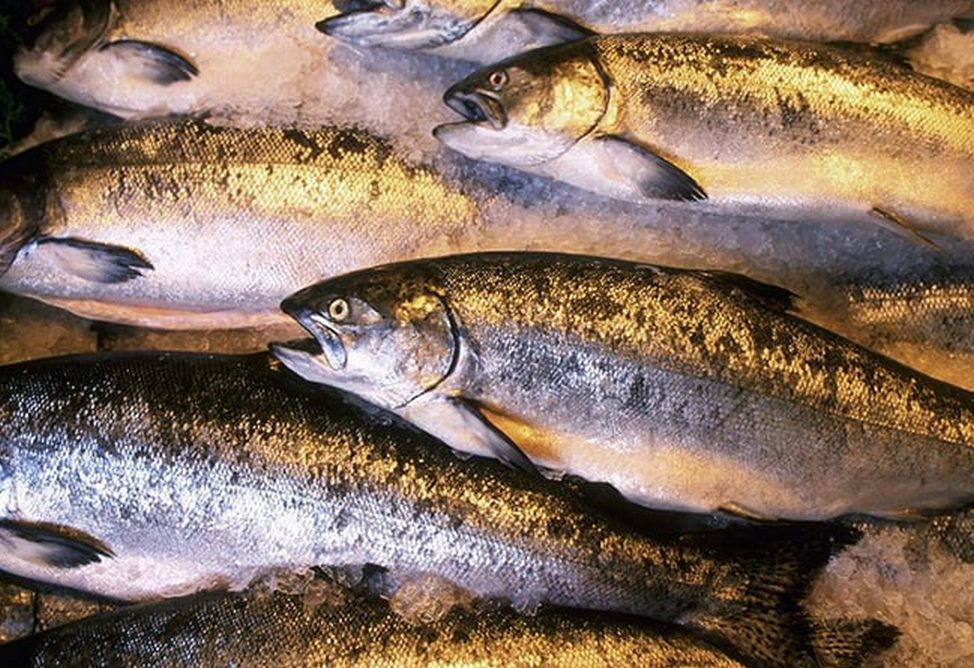
The rainbow trout declared in the veterinary documents did not match the imported fish in terms of morphological characteristics. It had an atypical coloration for this species and was abnormally large—over 5.5 kg. This indicates that the fish belonged to a different salmon family or to another trout species, which is a sign of counterfeit goods.
Salmon farming and sale are more typical in European countries, and such products may be subject to special economic measures (sanctions).
Furthermore, following the agreements reached, Rosselkhoznadzor (the Federal Service for Veterinary and Phytosanitary Surveillance) is planning an inspection of plant-growing enterprises in the Republic to ensure the supply of truly Armenian and phytosanitarily safe products.
The Service expressed concern over the increasing number of detections of organisms quarantined for EAEU member states in quarantine products imported from Armenia to Russia. In early April, Sergei Dankvert, head of Rosselkhoznadzor, stated that Russia continues to have concerns about plant and livestock products imported from Armenia, citing doubts about their origin and traceability, as well as numerous quarantine violations. He cited the integration of information control systems within the Eurasian Economic Union (EAEU) as a solution to the problem, which would ensure supply transparency and mitigate risks in the common market.
"Rosselkhoznadzor will inspect enterprises whose supplies to Russia were suspended due to suspected imports of counterfeit fish products, presumably of European origin," the Russian regulator stated in a statement.
It is noted that a preliminary inspection and analysis of materials, including photographs, of the imported rainbow trout raised doubts in Rosselkhoznadzor regarding the origin of the raw materials used to produce the products.
The rainbow trout declared in the veterinary documents did not match the imported fish in terms of morphological characteristics. It had an atypical coloration for this species and was abnormally large—over 5.5 kg. This indicates that the fish belonged to a different salmon family or to another trout species, which is a sign of counterfeit goods.
Salmon farming and sale are more typical in European countries, and such products may be subject to special economic measures (sanctions).
Furthermore, following the agreements reached, Rosselkhoznadzor (the Federal Service for Veterinary and Phytosanitary Surveillance) is planning an inspection of plant-growing enterprises in the Republic to ensure the supply of truly Armenian and phytosanitarily safe products.
The Service expressed concern over the increasing number of detections of organisms quarantined for EAEU member states in quarantine products imported from Armenia to Russia. In early April, Sergei Dankvert, head of Rosselkhoznadzor, stated that Russia continues to have concerns about plant and livestock products imported from Armenia, citing doubts about their origin and traceability, as well as numerous quarantine violations. He cited the integration of information control systems within the Eurasian Economic Union (EAEU) as a solution to the problem, which would ensure supply transparency and mitigate risks in the common market.