

Automation and Next-Generation Projects: How Renshin is Building a New Growth Model in Urban Development Investment Market
YEREVAN, April 15 /ARKA/. From an international audit by KPMG and asset growth to its first AMD 10 billion bond issue, “Renshin” is consistently strengthening its position as a prominent player in Armenia's urban development and investment market. The company emphasizes transparency, a sustainable financial model, and projects that it believes can not only generate income but also transform the urban environment.
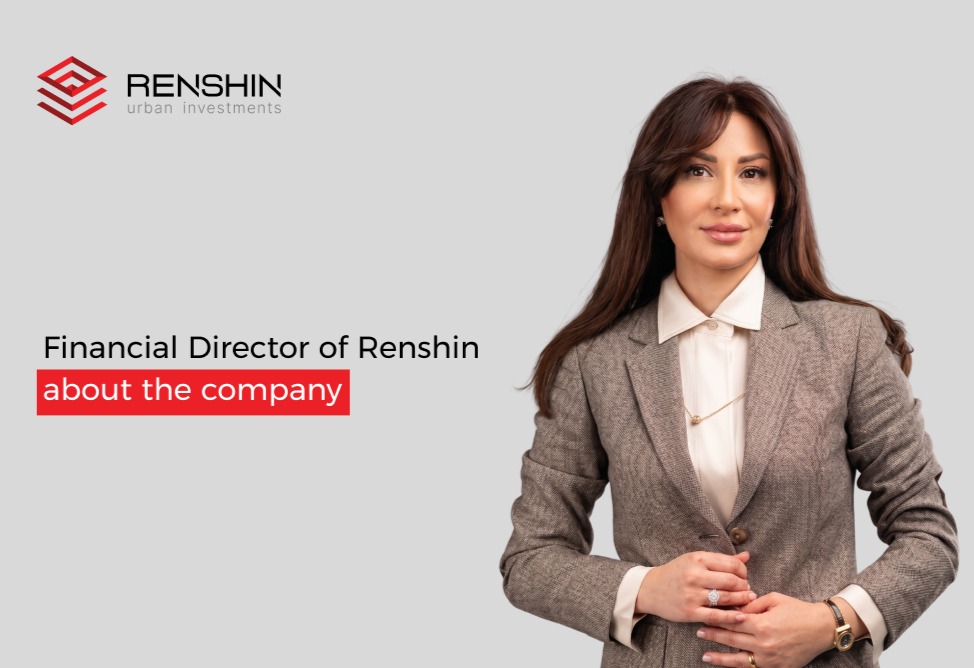
In an interview with ARKA news agency, “Renshin's” CFO, Kristine Chichyan, discussed why a developer should enter the capital market, how the company prioritizes residential, commercial, and infrastructure assets, and which areas “Renshin” views as the most promising in the coming years.
ARKA - For the fifth year in a row, the company has been audited by KPMG, a Big Four firm. What key financial stability parameters are confirmed during the audit, and what does this mean for investors?
K. Chichyan - The audit, conducted by KPMG, a Big Four firm, for five years in a row, confirms the reliability of our financial statements. The audit confirms key parameters such as capital adequacy, liquidity level, and asset quality. For investors, this means risk mitigation and a guarantee that the company operates according to international transparency standards.
ARKA - What is the practical value of an annual international audit for partners – banks, institutional investors, and real estate buyers?
K. Chichyan - An international audit is a practical tool for all beneficiaries. For banks, it reduces risk assessment, allowing us to attract financing on more competitive terms.
For institutional investors, it is a fundamental prerequisite for decision-making, confirming the company's "health." For buyers, an international audit confirms that the developer is stable and free of financial problems that could lead to the termination of construction.
ARKA - The company's assets at the end of 2025 amounted to 133.5 billion drams, compared to 102.6 billion drams at the end of 2024. What factors contributed to this growth, and how do you assess the sustainability of this model in the medium term?
K. Chichyan - This indicator is a direct result of our long-term strategy and calculated investment policy. This growth was achieved through effective capital management and the proper use of promising market opportunities. Regarding sustainability, our financial model is structured in such a way that we maintain stable growth rates even in changing economic conditions.
ARKA - The company issued its first bonds worth 10 billion drams. How will this impact the capital market?
K. Chichyan - The launch of Renshin's bond program is not just another financial transaction. It is a conscious and responsible step taken by Renshin to also operate within the institutional capital market. Entering the capital market is a new qualitative benchmark that requires high transparency and quality management. Companies that have already achieved a certain scale and sustainability are taking this step. We are convinced that this issue will bring a new culture to our market. The use of such financial instruments strengthens the institutional connection between the capital market and the real sector, where investment resources are directed toward the creation of real assets and the generation of long-term economic value. When the financial market is more actively involved in urban development projects, a more sustainable and systemic economic environment is formed.
ARKA - Which projects do you consider key for Renshin today, including those currently underway and those in the pipeline, and by what criteria does the company prioritize them?
K. Chichyan - All of our projects are more than just buildings or complexes. They are innovative environments that shape lifestyles and change trends. We have an approved strategic development concept for 2025-2030, which clearly defines the role and significance of our projects. Our portfolio is currently diverse – from residential areas to mixed-use public spaces, from a global business ecosystem to industrial parks.
All projects are equally important in their significance and necessity – both from a consumer perspective and in terms of the country's socioeconomic development and increasing its investment attractiveness.
As CFO, I highlight three core principles that guide us in selecting and managing projects.
IMPACT FACTOR:
We select projects that change the rules of the market. For example, Artlife Kempinski and WTCY are not only real estate but also hubs for international brands (Kempinski, Hyatt) and business connections. These projects are helping Armenia place itself on the global map.
Financial Multiplier:
Projects that create associated economic benefits—new jobs, tourism, and business infrastructure—are prioritized. This ensures a higher and more sustainable return on investment.
Innovation and Technology:
We prioritize solutions that utilize the latest advances in automation, energy efficiency, and modern engineering.
Thus, our portfolio is balanced: residential projects ensure dynamic growth and liquidity, while business and industrial ecosystems ensure the long-term sustainability of the company and strengthen the country's economic strength.
ARKA - If you look at these projects as a single portfolio, how do you differentiate them by strategic role and investment logic: which ones are focused on long-term growth, which on sustainable cash flow, and which on broader urban and infrastructure impacts?
K. Chichyan - Renshin's projects can be classified from a financial management perspective as follows.
Rapid Growth and Capitalization (Growth Assets)
This group includes the residential segments of current projects. These are premium residential projects aimed at ensuring high investment returns and rapid turnover through sales. This is the company's "driver," generating the necessary liquidity.
Stable Cash Flow (Yield Assets)
These are hotel and commercial properties that remain on the company's balance sheet and are managed by international operators. They provide long-term, predictable, and stable income, guaranteeing our financial security during periods of market fluctuations.
Strategic and Infrastructure Impact (Impact Assets)
The flagship project here is the World Trade Center (WTCY) and industrial parks. They create business ecosystems that enhance both the value of our other assets and Armenia's investment rating. These projects shape the company's institutional legacy.
ARKA - What role does automation already play in Renshin's operations – in design, planning, document management, financial accounting, sales, and deadline management?
K. Chichyan - For Renshin, automation is not an auxiliary tool, but the foundation of the company's financial and operational health. It enables us to manage large-scale projects while minimizing the risk of human error.
Here is the role of automation in key areas.
Design and Planning (BIM Technologies)
We use BIM (Building Information Modeling) systems, which allow us to create a digital twin of a building. Automatic calculation of required materials and identification of design discrepancies before construction begins prevents unforeseen budget increases.
Document Management and Internal Control
Digitalized systems (EDM) ensure speed and transparency in decision-making. Every contract or payment request goes through an automated approval chain, eliminating lost documents and corruption risks.
Financial Accounting
We use modern systems that integrate finance, procurement, and inventory. This allows us to see the cost of each project and budget deviations in real time.
Sales and Customer Service (CRM)
Using our CRM system, we have automated the entire sales funnel—from the first inquiry to the transfer of the title deed. This ensures high-quality service and predictable cash flows.
Project Management
Construction and management deadlines are monitored using digital schedules. Any delay in one link automatically signals the impact on subsequent stages, allowing management to respond promptly and meet deadlines.
ARKA - What corporate governance and internal control standards are in place at the company today, and how do they help manage risks, quality of execution, and financial discipline?
K. Chichyan - Renshina's corporate governance is based on a clear distinction between the strategic and operational levels, with the board of directors overseeing risk policy and overall direction. As we strive to achieve an international rating, the company is implementing a successful international corporate governance model, from charter amendments to operational procedures. To mitigate risks, we employ a multi-level control system, including operational responsibility, compliance monitoring, and internal independent audit. Financial discipline is ensured by strict budgeting mechanisms and a multi-stage expenditure approval chain. Quality of execution is guaranteed not only by internal technical controls but also by mandatory compliance with global standards of partners such as Kempinski and Hyatt, allowing us to effectively manage market risks and build investor confidence.
ARKA - What does Renshin's corporate culture mean to you in practice? What principles help build a strong team and maintain sustainability in long-term, capital-intensive projects?
K. Chichyan - Renshin's corporate culture is the cornerstone of our success, enabling us to effectively manage capital-intensive and long-term projects. Our team is built on a synergy of professionalism, responsibility, and innovation, where each specialist understands their role in shaping the company's global standing. We place particular emphasis on attracting international expats and highly qualified consultants, enabling us to localize global experience and best practices across all our projects. At the same time, the company invests significantly in long-term employee incentive systems, building a sustainable and motivated "strong core" capable of consistently implementing programs of unprecedented scale and complexity in Armenia over many years. This open and transparent communication environment, combined with international experience, reduces operational risks and ensures the fulfillment of our ambitious commitments.
ARKA - What new project areas or formats is the company considering in the coming years, and why do you see them as promising in terms of demand and investment potential?
K. Chichyan - In terms of Renshina's future development, we are guided by the strategic concept approved by the Board of Directors, which clearly defines the main development areas for the next five years. Within this framework, our focus is on Branded Residences and Mixed-Use ecosystems. These formats are promising, as today's consumers are looking not just for square footage, but for a holistic lifestyle and high-quality service guaranteed by reputable international brands. Such projects have high investment potential, as they provide higher added value and capitalization growth.
In the long term, we see the company as an operator managing entire neighborhoods. This means that our responsibility does not end with the completion of construction: our vision is to create and manage a unified environment where residential, business, and recreational areas function harmoniously, ensuring long-term property value retention. In this context, we actively integrate smart and sustainable (Green & Smart) urban development solutions that reduce operating costs and enhance asset attractiveness for international investors. At the same time, the company's goals remain to create business and technology hubs, such as the World Trade Center, which ensure the country's economic integration into global markets and generate sustainable cash flows.