

EU will allocate an additional €18 million to Armenia and offer duty-free access for 80% of exports: Head of the European Commission
02.07.2026,
13:08
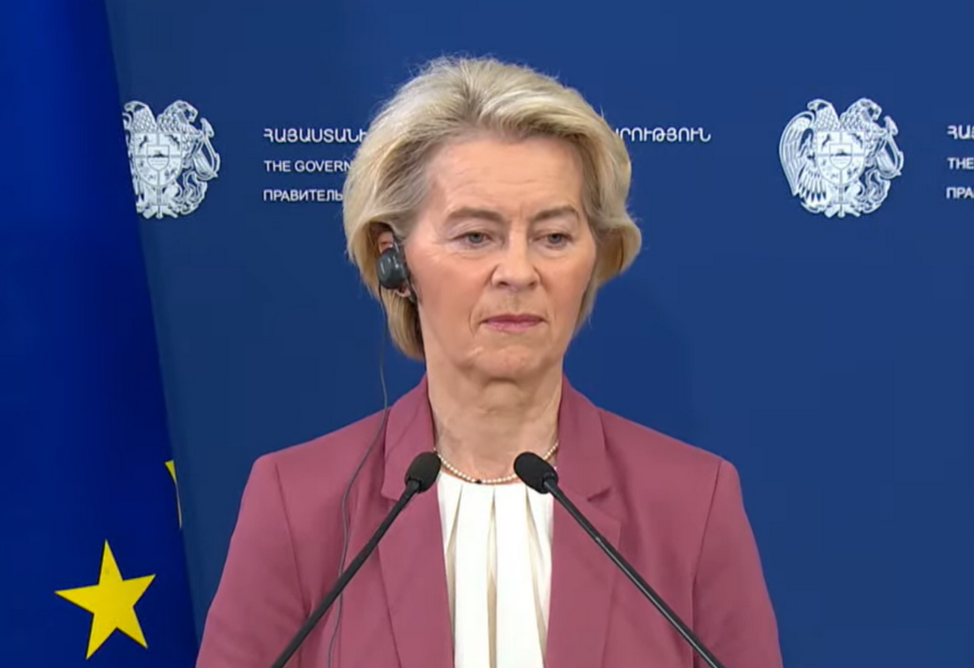
The European Union will allocate an additional €18 million to Armenia to strengthen and diversify trade, and will also offer autonomous trade measures that will allow the liberalization of approximately 80% of Armenian exports to the EU, European Commission President Ursula von der Leyen said in Yerevan.
YEREVAN, July 2. /ARKA/. The European Union will allocate an additional €18 million to Armenia to strengthen and diversify trade, and will also offer autonomous trade measures that will allow the liberalization of approximately 80% of Armenian exports to the EU, European Commission President Ursula von der Leyen said in Yerevan.
"I know that Armenia continues to face significant economic pressure from Russia, practically bordering on economic coercion. But rest assured: when the pressure on our partners intensifies, the European Union comes to the rescue and takes concrete steps," von der Leyen said at a joint briefing with Armenian Prime Minister Nikol Pashinyan.
According to the EC President, Armenia will soon receive an additional €18 million, which could be used, in particular, to establish an Export Promotion Agency to expand the export potential of Armenian businesses. Von der Leyen noted that the €18 million is the final portion of the previously announced €52 million budget support package.
The head of the European Commission also touched on the autonomous trade measures proposed by Brussels for Armenian products. "This will liberalize approximately 80% of Armenian exports to the European Union. Thus, approximately 80% of your trade with us will no longer be subject to tariffs," she said.
According to von der Leyen, this will allow Armenia to redirect some of its exports, currently largely oriented toward the Russian market, toward the EU market, which has approximately 450 million consumers.
She explained that these measures will open the European market to nearly 99% of Armenia's fresh agricultural produce, including vegetables, fruits, and other plant-based products, as well as to over 90% of its beverage and alcoholic beverage exports.
"In recent months, we have already seen an increase in the supply of Armenian flowers to the European market. This is a wonderful symbol of the beginning of a new chapter in our economic partnership," the President of the European Commission said.
Von der Leyen also announced that a team of European experts will arrive in Armenia in mid-July. They will work with Armenian producers, exporters, and businesses, helping them take advantage of new opportunities opening up through expanded trade cooperation with the EU.
Furthermore, the President of the European Commission announced a new support package of €200 million as part of the Global Gateway initiative, aimed at developing connectivity in the region.
According to her, up to €2 billion is planned to be mobilized in cooperation with European financial institutions for the implementation of transport, energy, and digital projects in the South Caucasus, including the modernization of border and road infrastructure in Armenia.
Von der Leyen also announced the launch of a €20 million peace support program for Armenian border communities. The funds will be used to develop local economies, support small businesses, introduce modern agricultural technologies, and promote efficient water resource management.
"I know that Armenia continues to face significant economic pressure from Russia, practically bordering on economic coercion. But rest assured: when the pressure on our partners intensifies, the European Union comes to the rescue and takes concrete steps," von der Leyen said at a joint briefing with Armenian Prime Minister Nikol Pashinyan.
According to the EC President, Armenia will soon receive an additional €18 million, which could be used, in particular, to establish an Export Promotion Agency to expand the export potential of Armenian businesses. Von der Leyen noted that the €18 million is the final portion of the previously announced €52 million budget support package.
The head of the European Commission also touched on the autonomous trade measures proposed by Brussels for Armenian products. "This will liberalize approximately 80% of Armenian exports to the European Union. Thus, approximately 80% of your trade with us will no longer be subject to tariffs," she said.
According to von der Leyen, this will allow Armenia to redirect some of its exports, currently largely oriented toward the Russian market, toward the EU market, which has approximately 450 million consumers.
She explained that these measures will open the European market to nearly 99% of Armenia's fresh agricultural produce, including vegetables, fruits, and other plant-based products, as well as to over 90% of its beverage and alcoholic beverage exports.
"In recent months, we have already seen an increase in the supply of Armenian flowers to the European market. This is a wonderful symbol of the beginning of a new chapter in our economic partnership," the President of the European Commission said.
Von der Leyen also announced that a team of European experts will arrive in Armenia in mid-July. They will work with Armenian producers, exporters, and businesses, helping them take advantage of new opportunities opening up through expanded trade cooperation with the EU.
Furthermore, the President of the European Commission announced a new support package of €200 million as part of the Global Gateway initiative, aimed at developing connectivity in the region.
According to her, up to €2 billion is planned to be mobilized in cooperation with European financial institutions for the implementation of transport, energy, and digital projects in the South Caucasus, including the modernization of border and road infrastructure in Armenia.
Von der Leyen also announced the launch of a €20 million peace support program for Armenian border communities. The funds will be used to develop local economies, support small businesses, introduce modern agricultural technologies, and promote efficient water resource management.