


Armenia is getting closer to receiving market economy status from the US, but the wait is still long — business consultant
27.07.2026,
14:46
Armenia is significantly closer to receiving market economy status from the US than it was in the early 2000s.
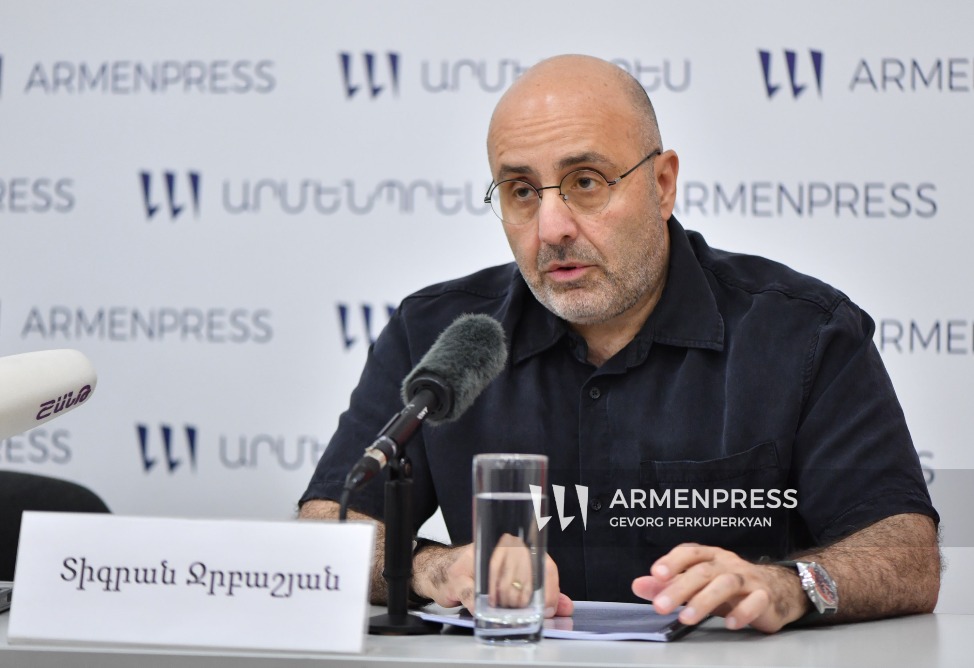
YEREVAN, July 27. /ARKA/. Armenia is significantly closer to receiving market economy status from the US than it was in the early 2000s. However, to achieve this, it will require a comprehensive and detailed assessment of its economic system. This opinion was expressed by Tigran Jrbashyan, head of the management consulting service at Ameria, in an interview with ARKA news agency.
On July 23, Armenian Minister of Economy Gevorg Papoyan and US Chargé d'Affaires David Allen discussed granting Armenia market economy status. No decision was made following the meeting, but the issue has been officially included on the bilateral agenda.
According to Jrbashyan, market economy status provides the country with more favorable conditions in terms of trade regulation, export and import controls, and investment cooperation.
"I worked on this issue back in the early 2000s, when the European Union was discussing granting Armenia Market Economy Status. We prepared a comprehensive report on the matter back then," the expert noted.
Jrbashyan said that a country granted Market Economy Status by another state gains greater access to markets, investments, and joint projects. Typically, such regimes are created to facilitate trade regulation between countries.
He emphasized that obtaining such status is not a political decision, but a lengthy and comprehensive process of assessing the national economy.
"Compared to the situation in the early 2000s, Armenia is now much closer to Market Economy Status than before. But this is a very rigorous questionnaire that must be answered in detail. This is a serious study," the expert said.
Jrbashyan recalled that when preparing a similar assessment for the European Union, a report of approximately 1,000 pages was developed.
"It was a detailed description of every market, every regulation, every resource." "EU experts spent almost a month in Armenia, discussing materials with us, verifying information, and meeting with government agencies," he said.
According to the expert, such assessments are useful not only for international partners but also for the country itself.
"This allows us to look at Armenia's economy from a distance and understand the gaps that need to be addressed. I believe that every country needs to do this exercise from time to time to systematically and comprehensively assess how well it meets the requirements of a modern market economy," Jrbashyan stated.
Market Economy Status signifies recognition that prices, production costs, and resource allocation in the country are determined primarily by market mechanisms rather than government regulation. This status is important for conducting anti-dumping investigations, regulating trade, attracting investment, and developing economic cooperation with the state that grants it.
On July 23, Armenian Minister of Economy Gevorg Papoyan and US Chargé d'Affaires David Allen discussed granting Armenia market economy status. No decision was made following the meeting, but the issue has been officially included on the bilateral agenda.
According to Jrbashyan, market economy status provides the country with more favorable conditions in terms of trade regulation, export and import controls, and investment cooperation.
"I worked on this issue back in the early 2000s, when the European Union was discussing granting Armenia Market Economy Status. We prepared a comprehensive report on the matter back then," the expert noted.
Jrbashyan said that a country granted Market Economy Status by another state gains greater access to markets, investments, and joint projects. Typically, such regimes are created to facilitate trade regulation between countries.
He emphasized that obtaining such status is not a political decision, but a lengthy and comprehensive process of assessing the national economy.
"Compared to the situation in the early 2000s, Armenia is now much closer to Market Economy Status than before. But this is a very rigorous questionnaire that must be answered in detail. This is a serious study," the expert said.
Jrbashyan recalled that when preparing a similar assessment for the European Union, a report of approximately 1,000 pages was developed.
"It was a detailed description of every market, every regulation, every resource." "EU experts spent almost a month in Armenia, discussing materials with us, verifying information, and meeting with government agencies," he said.
According to the expert, such assessments are useful not only for international partners but also for the country itself.
"This allows us to look at Armenia's economy from a distance and understand the gaps that need to be addressed. I believe that every country needs to do this exercise from time to time to systematically and comprehensively assess how well it meets the requirements of a modern market economy," Jrbashyan stated.
Market Economy Status signifies recognition that prices, production costs, and resource allocation in the country are determined primarily by market mechanisms rather than government regulation. This status is important for conducting anti-dumping investigations, regulating trade, attracting investment, and developing economic cooperation with the state that grants it.