

ARKA Armenia Weekly: Key Events of the Week: Politics, Economy, and Markets (April 27 – May 3)

YEREVAN, May 4. /ARKA/. ARKA News Agency presents a digest of the week's key events.
SUMMARY
The week was distinguished by a combination of robust macroeconomic data and practical restrictions related to logistics, foreign trade, and market access.
Policy remained focused on delimitation, the European agenda, and transport unblocking. In the economy, the key signal was the stability of growth despite a more uneven structure: industry, construction, and services maintained momentum in the first quarter, while foreign trade weakened in March. Foreign trade risks emerged in the context of the Jermuk mineral water crisis.
For businesses and markets, the week confirmed that growth potential remains, but its quality is increasingly dependent on infrastructure, regulatory coordination, trust in institutions, and access to external sales channels.
POLITICS
The key political event of the week was the meeting of the Armenian and Azerbaijani border delimitation commissions. On April 29, in Aghveran, chaired by Deputy Prime Ministers Mher Grigoryan and Shahin Mustafayev, the parties agreed on draft instructions on the procedure for conducting delimitation work and signed the corresponding protocol. Armenian Prime Minister Nikol Pashinyan called the deputy prime ministers' mutual visits an important step and stated that relations between Armenia and Azerbaijan must consistently improve. For businesses, this is a signal of a gradual reduction in political uncertainty, although the practical effect will depend on the continued implementation of the agreements.
The European dimension also received institutional development. The European Parliament adopted a resolution on supporting Armenia's democratic development and European integration, welcoming the new EU-Armenia strategic agenda, progress on CEPA, the visa liberalization dialogue, and the "Resilience and Growth" program. For investors, this confirms that the European agenda is becoming part of the country's long-term political and economic positioning.
A separate signal came from the Armenian-Turkish track. On April 28, a meeting of the joint working group on the restoration and reopening of the Gyumri-Kars railway took place in Kars; the EU welcomed the meeting. For the economy, this isn't an immediate change in logistics, but it is an important indicator: unblocking transport remains a key factor in future regional trade.
ECONOMY AND MACRO SIGNALS
One of the week's notable macro signals was the Statistical Committee's data. Armenia's economic activity grew by 7.1% in the first quarter, supported by industry, construction, and services; however, agriculture contracted. This is important, as the economy remains above the budget target, but the growth structure remains uneven. Another important indicator is that foreign trade turnover increased by 4.6% to $4.7 billion. Exports increased by 4.5% and imports by 4.6%, but both indicators declined in March, both year-on-year and month-on-month. This is a double signal for the market: foreign trade remains positive quarter-on-quarter, but March's dynamics indicate sensitivity to external demand and logistical conditions. On Labor Day, Pashinyan announced that approximately 280,000 jobs had been created in Armenia since 2018, the economy had grown by 53.9% compared to 2017, and tax revenues to the state budget had more than doubled. For the market, this is part of the pre-election economic framework: the authorities are emphasizing employment, growth, and continuation of the current course.
Foreign trade risks were highlighted by the situation with Jermuk mineral water. The Russian labeling system "Honest Sign" first suspended sales of 338,000 bottles, and then more than 1 million bottles of the product in offline and online stores pending an investigation. The Armenian regulator stated that it was investigating the reports and had not received official information from Russian agencies. For exporters, this is a reminder of the sensitivity of access to foreign markets to technical regulations and interdepartmental communication.
Another macroeconomic risk was associated with liquefied gas supplies. The Ministry of Economy attributed the disruptions to congestion at the Lars checkpoint and temporary logistical difficulties. The ministry noted that while there isn't a complete shortage, temporary disruptions are possible at individual gas stations. For businesses, this demonstrates that logistical bottlenecks directly impact prices, transportation costs, and consumer expectations.
BUSINESS AND CORPORATE SECTOR
Restrictions have emerged in the e-commerce market for Armenian sellers on Russian marketplaces. Wildberries announced that customs clearance rules in Russia changed on April 20, requiring sellers to submit additional documents. Ozon reported difficulties with delivering goods from Armenia and efforts to restore supply chains. This poses a practical risk for SMEs: access to external digital sales channels depends not only on demand but also on customs procedures.
A notable investment story of the week was the Amulsar mine program. The government approved an import duty exemption for Mota-Angel Mining Caucasus LLC as part of an 81.4 billion drams investment program. The funds will be used to purchase equipment, and the number of jobs is planned to increase to 475 by 2027. For the mining sector, this is a strong signal of renewed capital investment, but the project remains sensitive to environmental and social issues.
The EU has outlined the scale of its support for the private sector: Head of the EU Delegation Vassilis Maragos stated that over the past two years, the EU has invested over €400 million in Armenia's private sector, and the companies that received support have seen exports grow by 7.2%. For businesses, this confirms the role of European programs as a source of funding and a means of enhancing export competitiveness.
MARKETS AND FINANCE
Financial infrastructure received a significant signal at the FINTECH360 conference in Yerevan, which attracted over 400 participants. Topics included the digital transformation of financial services, AI in banking, biometrics, digital identification, payment innovations, asset tokenization, cryptocurrencies, and blockchain. For banks and fintech companies, this confirms that competition is increasingly shifting to technology, data, and user access.
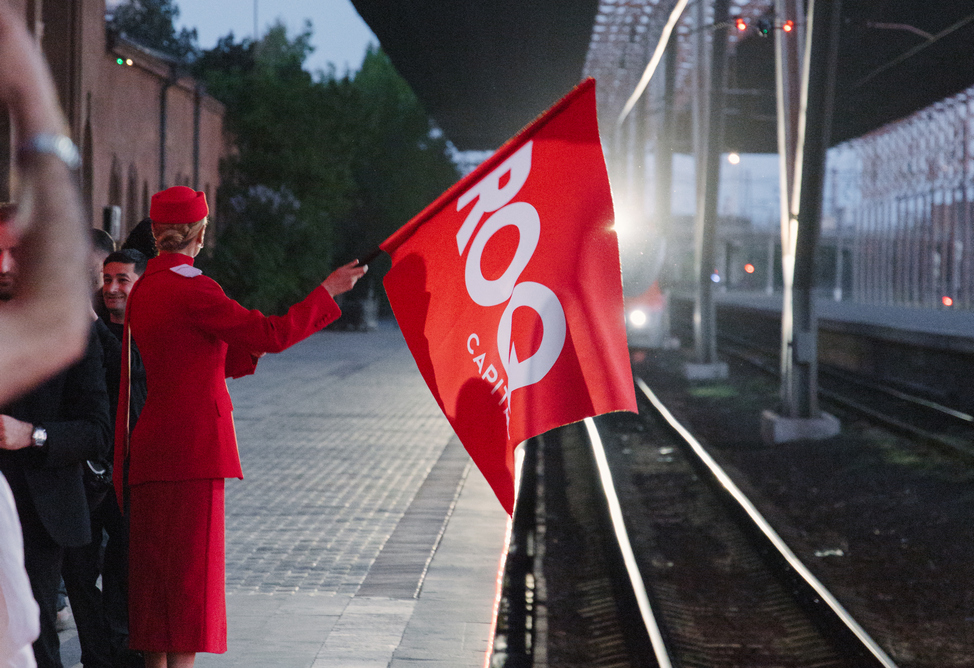
In the capital markets, a significant event was the rebranding of Armbrok to ROQ Capital. The company unveiled a new structure, including ROQ Funds, and announced the ROQ Markets app for quickly opening an investment account and accessing international markets. For investors, this signals the gradual expansion of capital management infrastructure and the transition from traditional brokerage to more technologically advanced investment services.
The regulatory agenda also affected the online casino market. MP Hayk Sargsyan stated that online casino betting volume in Armenia has increased more than 35-fold over the past eight years, and proposed restricting access to such platforms as much as possible. For the financial market, this is a matter not only of social policy but also of regulating payment flows, consumer risks, and the digital environment.
The 30th anniversary of the ARKA news agency was a significant event in the media market. For the business information community, this is not only a corporate milestone but also a reminder of the role of specialized economic media in fostering trust, transparency, and professional communication between the government, businesses, and investors. In its analytical report for the anniversary, the agency highlighted the challenges associated with changing media models, technological advances, and the need to maintain trust in an information glut.
The transport infrastructure received an additional regional signal: Kazakhstan's SCAT Airlines launched regular Aktau-Yerevan-Aktau flights, operating twice a week—on Tuesdays and Saturdays—since April 18. For the market, this expands Armenia's direct connection with Kazakhstan and can support business travel, tourism, and regional contacts.
WHAT DOES THIS MEAN?
Macrodata confirms economic resilience, but the structure of growth requires attention.
Foreign trade remains positive for the quarter, but the decline in March demonstrates the economy's sensitivity to logistics and external demand.
Infrastructure is becoming a key factor in competitiveness—from railways and air travel to customs procedures and marketplaces.
The role of trusted business information is increasing: for investors and businesses, data quality and professional interpretation are becoming part of market infrastructure.
RISKS OF THE CURRENT WEEK
Markets will be watching to see whether the positive momentum in economic activity continues after a strong first quarter.
The decline in foreign trade indicators in March could increase attention to exports, imports, and logistics constraints.
Delays on external routes could impact fuel supplies, prices, and business expectations.
Customs procedures and access of Armenian sellers to external marketplaces will remain an important factor for digital businesses. Investors will assess the extent to which new transport routes and infrastructure projects move from the political agenda to practical economic practice.