


Armenian apricots should become a global brand, not a commodity: Jrbashyan outlines 3 steps
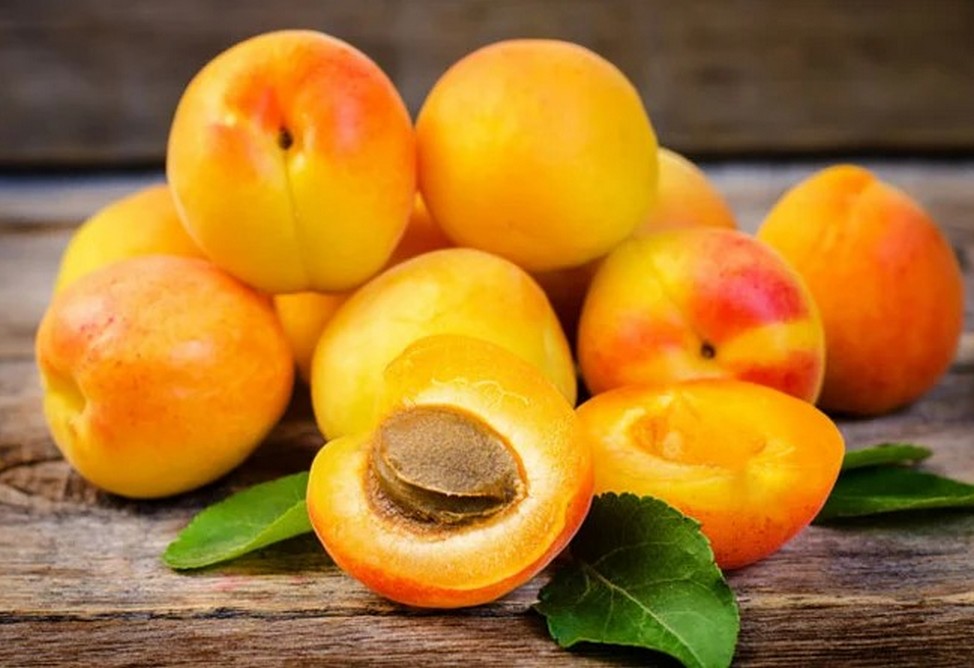
YEREVAN, June 10. /ARKA/. Armenia needs to reevaluate its strategy regarding apricot exports, shifting from a mass-produced commodity to a product that boasts a protected identity and significant added value, as stated by Tigran Jrbashyan, Director of Management Advisory at Ameria.
He pointed out that the Armenian apricot holds a distinctive advantage recognized by science: its Latin designation, Prunus armeniaca, translates to "Armenian plum."
"When Linnaeus categorized the plant kingdom in the 18th century, he identified Armenia as the origin of this fruit. […] This is not a myth. This is not folklore. This is taxonomy," Jrbashyan shared on his social media.
For many years, as Jrbashyan highlights, Armenia has primarily marketed apricots as an anonymous wholesale product—mainly in the Russian market, priced at 40-70 cents per kilogram, lacking a brand, history, or distinct identity, much like any generic raw material, competing solely on price.
Jrbashyan believes that the closure or reduction of the Russian market should not be viewed merely as an opportunity to find a new wholesale buyer. He argues that this is not a moment for replacement, but rather for a transformation of the model.
He estimates that while the Russian wholesale model generated $10-18 million for the industry each season, a well-developed global model targeting Europe, the US, and the Persian Gulf could yield $150-200 million annually—with smaller physical volumes and increased independence from any single market.
Three Key Steps
Jrbashyan's initial recommendation is to halt the wholesale export of fresh, unpackaged, and unbranded Armenian apricots entirely.
"Only a select 10% of the harvest should enter premium fresh produce markets, sold individually. The remainder will be transformed into dried fruits, preserves, concentrates, and essences—all unified under a single identity, a geographical indication, and a shared origin story," he states.
The second step involves promptly seeking geographical indication protection within the EU.
"Prunus armeniaca serves as Armenia's legal claim, and no one else can assert it," he insists.
The third step is to involve the Armenian diaspora as both the primary market and the initial investor.
"Armenians residing in Los Angeles, Paris, Beirut, and Dubai are likely to purchase and invest in a product that reflects their identity. This is not mere sentimentality." "This represents logical economic behavior supported by an established distribution network," Jrbashyan stresses.
He believes that the pressing issue for Armenia today is not about finding a replacement for Russia.
"Rather, it is whether Armenia will finally realize what three centuries of scientific nomenclature have subtly suggested," he concludes.
As of June 2, Russia has enacted a temporary ban on the import of stone fruits (including cherries, sweet cherries, apricots, plums, peaches, and nectarines) and fresh grapes from Armenia.es from Armenia.-0-