


19 Russian Companies Seek Partners in Armenia as “Made in Russia” Business Mission Takes Place in Yerevan
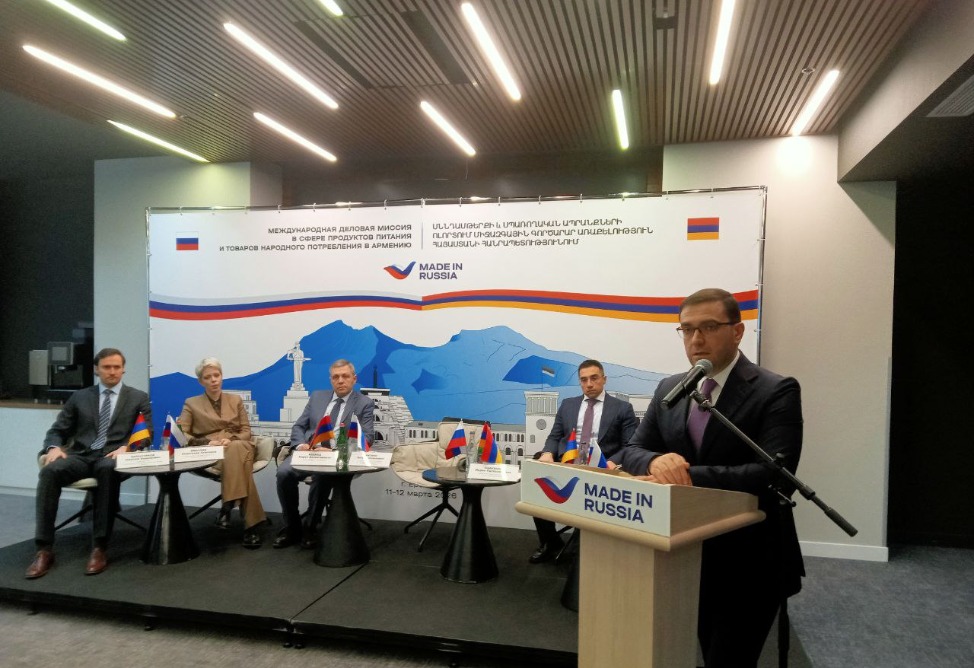
YEREVAN, March 11. /ARKA/. A business mission of 19 Russian companies—manufacturers of food, cosmetics, and household chemicals is taking place in Yerevan from March 11–12 as part of the "Made in Russia" program, organized by the Russian Export Center (REC).
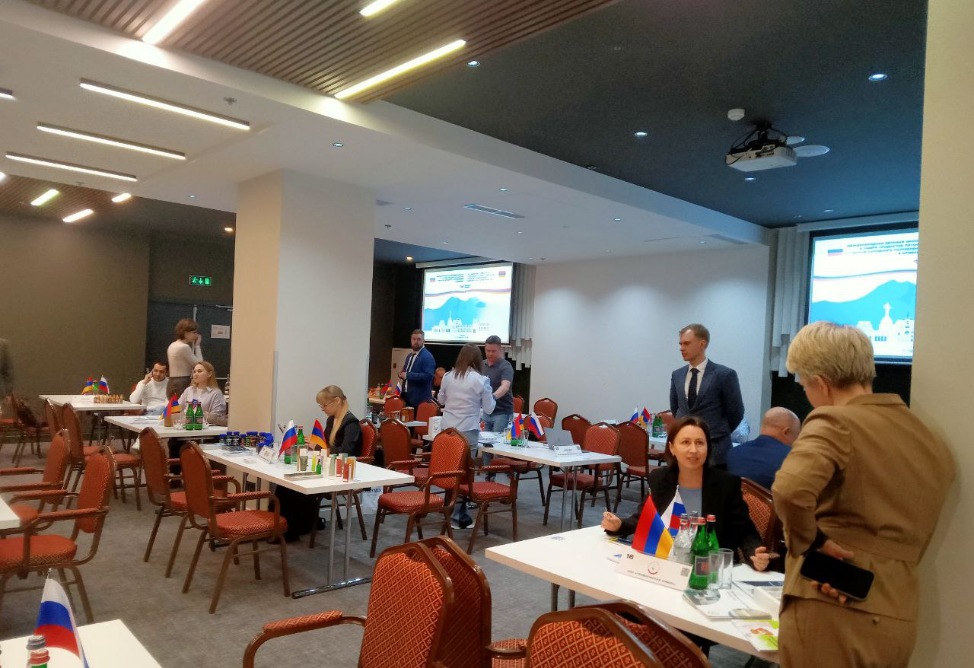
The mission includes B2B negotiations between Russian manufacturers and Armenian distributors and representatives of retail chains.
Russia is Armenia's main trade and economic partner
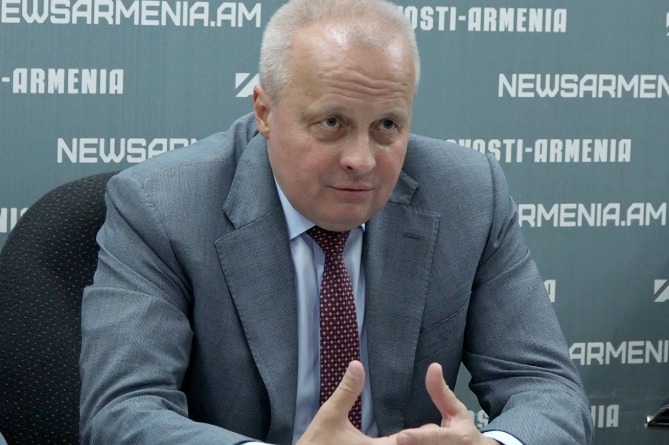
Russian Ambassador to Armenia Sergey Kopyrkin welcomed the opening of the international business mission.
"It is gratifying that this important and much-needed event was supported by the Armenian side, particularly through the Ministry of Economy of the Republic of Armenia. As last year's results demonstrated, Russia retained its role as the republic's main trade, economic, and investment partner," Kopyrkin said in his message.
He noted that Russian capital is widely represented in key sectors of the Armenian economy—mining, energy, metallurgy, transport and logistics, banking, and information and communications technology.
According to the diplomat, the leading positions of Russian economic operators are not only a legacy of their shared Soviet history but also the result of the active work of the two countries' business communities, which continue to develop cooperation despite economic and logistical challenges.
Kopirkin also emphasized the contribution of Armenia's 11-year membership in the Eurasian Economic Union, whose mechanisms have facilitated the development of bilateral trade and economic ties and industrial cooperation.
He noted that significant potential exists for deepening bilateral economic cooperation, particularly in interregional interaction and the development of online commerce through marketplaces.
Russian Products in the Armenian Market: The Role of Personal Contacts
Vigen Yenokyan, Head of the Armenian Representative Office of the Russian Export Center, spoke about the importance of such business missions and the demand for Russian products in the Armenian market.
"Confectionery, oil and fat products, meat, and dairy products are in the greatest demand. Overall, the entire range of agricultural products produced in the Russian Federation is in high demand and popularity in Armenia," Yenokyan told reporters.
According to him, such events allow for direct dialogue between Russian producers and Armenian buyers. Large distributors of Armenian retail chains and Russian producers of sought-after products gather in one venue.
Business negotiations between companies from both sides take place over two days in the "Contact Exchange" format.
"We are convinced that business missions and exhibitions are an important factor in promoting exports and entering new markets," Yenokyan said.
According to him, additional potential for cooperation stems from the unified economic space and new opportunities for exporting Russian goods via rail routes.
Responding to a question from the ARKA news agency, Yenokyan noted that previous business missions have already resulted in contracts.
"For example, last year, as a result of these events, contracts were signed for the supply of vaccines. There are also contracts in the fields of meat products, milk powder, and oil and fat products," he said.
According to him, despite the development of digital communication channels, face-to-face negotiations between producers and buyers remain an important factor in building trust.
Armenia is a reliable partner for Russian companies
Vice President of the Chamber of Commerce and Industry of Armenia Karen Ivanov told reporters that Russian companies entering the Armenian market often begin to compete with each other.
"Because there's really limited space on retail shelves. When better conditions for quality or supply are available, Russian goods begin to compete with each other," Ivanov said. According to him, there is a constant rotation of goods on the market, they are being replaced by higher-quality or more affordable products.
He also noted that exports from Armenia to Russia have recently been declining, while imports are increasing.
According to Ivanov, this is due to the fact that Russian companies, under international sanctions, view the Armenian market as a reliable partner and alternative sales outlet.
At the same time, he noted, Armenian producers are gradually diversifying their sales markets.
"While Russia remains the number one market for Armenian highly processed products, Armenian producers are striving to expand their supply geography," he said.
Ivanov also emphasized the importance of joint Armenian-Russian production facilities located in Armenia, which can take advantage of the country's cooperation with the EU to enter new markets.
Business Mission as a Factor in the Development of Economic Ties
Armenian Deputy Minister of Economy Narek Hovakimyan noted the importance of the mission for expanding trade and economic cooperation between Armenia and Russia. "I think that today's event will contribute to the further development of trade and economic ties between the Republic of Armenia and the Russian Federation," said Hovakimyan.
He noted that Russia will remain one of Armenia's key trading partners by the end of 2025, with its share of Armenia's foreign trade exceeding 35%.
Hovakimyan noted that the event is dedicated to the development of industries related to food and consumer goods.
According to him, these sectors have a significant multiplier effect, as their development stimulates the growth of other sectors of the economy, creates jobs, and increases consumer demand.
The Deputy Minister emphasized the potential for cooperation in the production of food, cosmetics, pharmaceuticals, and agricultural products.
He noted that in recent years, public and private programs have been implemented in Armenia to modernize the agricultural sector, expand production, and improve product quality.
Hovakimyan also noted the importance of the Armenian government's "Crossroads of Peace" initiative, aimed at developing regional transport and economic ties. According to him, the development of railway communications is of particular importance in this context, as it could create new opportunities for logistics and expand export deliveries.