


Researchers from Armenia and Germany will study Armenian wild grape genome
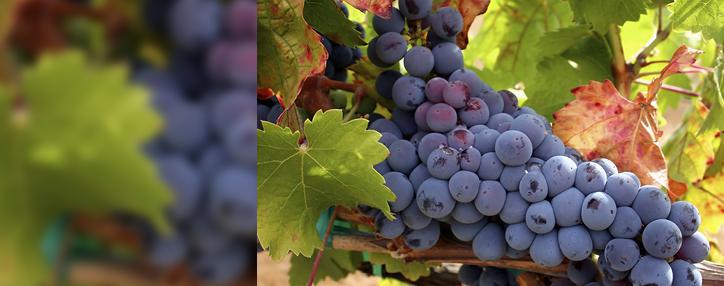
YEREVAN, May 5. /ARKA/. A team of researchers from Armenia and Germany will study the genome of wild Armenian grape varieties as part of ADVANCE bioinformatics grant program.
The team includes six local and two foreign scientists and students. The research project aims to create machine-learning-based bioinformatics methods for studying plant genomics. The team's discoveries can be applied to viticulture and winemaking in Armenia.
Leipzig University professor and head of the research team Hans Binder said at a Friday press conference in Yerevan that the project is implemented in cooperation with the Foundation for Armenian Science and Technology (FAST).
Hans Binder said the idea arose from collaboration with a scientific group from the Institute of Molecular Biology in Yerevan, which deals with grape genomics. The group has established international cooperation, sending samples of wild Armenian grapes to colleagues. With the help of international colleagues they derive data and publish joint scientific articles, but Armenian scientists are listed only as co-authors.
"In grape genomics research, it is interesting to identify resistance or resistance genes, which are associated with the winemaking industry. Plants, including grapes, suffer from diseases, including fungal diseases. As it turns out, many species of wild Armenian grapes are resistant to them. And by finding the genes responsible for this resistance, we can get important results, and in the future they can be introduced into other grape varieties and ensure their resistance," he said.
"Armenia has a database with descriptions of grape varieties growing in the country, but with this project we will introduce two innovations. The first one refers to the description of wild grape varieties: the database contains information about cultivated varieties, while there are over 100 kinds of wild grapes in the country. The second one is that we will introduce full genome analysis. The existing database is based on certain markers, but we will study the entire genome of grapes," he said.
Senior researcher Maria Nikoghosyan said that their team is just studying the genetic diversity of different varieties of wild Armenian grapes, looking for genetic changes responsible for resistance to diseases.
"We hope that this knowledge will be the basis for creating certain breeding programs in the future," she said.
FAST Foundation's head of research promotion programs Veronika Aghajanyan said that partnership within the ADVANCE grant program have been underway since 2020 and currently 10 teams in Armenia are working on it under the guidance of foreign scientists.
"One of the important elements of the program is that the scientific supervisor is invited from abroad and the team itself is formed in Armenia from students and researchers so that in the future centers of excellence are created around the teams and programs and develop relevant directions," she said.
Aghajanyan stressed that FAST, along with partners and donors, provides funding and other support for the teams to enable them to implement their research programs and build international ties. The most important outcome expected from the program, she said, is scientific publications in cutting-edge international journals. -0-