


Russia calls on Karabakh conflict sides to stop bloodshed
06.07.2017,
15:40
Russia calls on the parties to the Nagorno-Karabakh conflict to take measures to stabilize the situation and stop the bloodshed after the July 4 incident that caused civilian casualties, Russian Foreign Ministry spokesperson Maria Zakharova said Thursday.
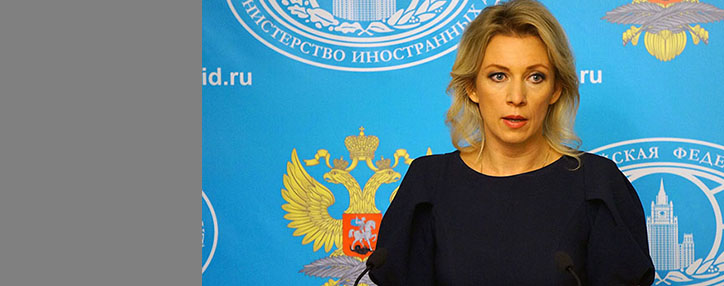
YEREVAN, July 6. /ARKA/. Russia calls on the parties to the Nagorno-Karabakh conflict to take measures to stabilize the situation and stop the bloodshed after the July 4 incident that caused civilian casualties, Russian Foreign Ministry spokesperson Maria Zakharova said Thursday.
In the evening of July 4, the Azerbaijani side used TR-107 multiple rocket launchers to shell the territory of the Republic of Artsakh (Nagorno-Karabakh Republic) for the first time since the April aggression in 2016. The launchers were deployed in the village of Alkhanlu, in close proximity to residential houses.
"According to the information we have received from the parties to the Karabakh conflict, on the evening of July 4, another ceasefire violation took place on the line of contact, resulting in human casualties, including among civilians and children. We express our condolences to the relatives and friends of the deceased. Further bloodshed is unacceptable," Zakharova said.
The Artsakh defense army said it was forced to take counter-measures to suppress the fire of the Azerbaijani army. As a result of the incident provoked by the Azerbaijani side, unfortunately, there are victims among the villagers, it said.
"We call upon the parties to take all necessary measures to stabilize the situation. We support the opinion of the OSCE Minsk Group co-chairs that emphasizes the need to end violence and resume negotiations," she added.
Zakharova stressed that Russia is keeping this topic under special control, doing everything to bring it back to the negotiation table within the framework of the OSCE Minsk Group, co-chaired by the United States, Russia and France.
The Nagorno-Karabakh conflict between Armenia and Azerbaijan erupted into armed clashes after the collapse of the Soviet Union in the early 1990s as the predominantly Armenian-populated enclave of Azerbaijan sought to secede from Azerbaijan and declared its independence backed by a successful referendum.
On May 12, 1994, the Bishkek cease-fire agreement put an end to the military operations. A truce was brokered by Russia in 1994, although no permanent peace agreement has been signed. Since then, Nagorno-Karabakh and several adjacent regions have been under the control of Armenian forces of Karabakh.
Nagorno-Karabakh is the longest-running post-Soviet era conflict and has continued to simmer despite the relative peace of the past two decades, with snipers causing tens of deaths a year. On April 2, 2016, Azerbaijan launched military assaults along the entire perimeter of its contact line with Nagorno-Karabakh. Four days later a cease-fire was reached. ---0---
In the evening of July 4, the Azerbaijani side used TR-107 multiple rocket launchers to shell the territory of the Republic of Artsakh (Nagorno-Karabakh Republic) for the first time since the April aggression in 2016. The launchers were deployed in the village of Alkhanlu, in close proximity to residential houses.
"According to the information we have received from the parties to the Karabakh conflict, on the evening of July 4, another ceasefire violation took place on the line of contact, resulting in human casualties, including among civilians and children. We express our condolences to the relatives and friends of the deceased. Further bloodshed is unacceptable," Zakharova said.
The Artsakh defense army said it was forced to take counter-measures to suppress the fire of the Azerbaijani army. As a result of the incident provoked by the Azerbaijani side, unfortunately, there are victims among the villagers, it said.
"We call upon the parties to take all necessary measures to stabilize the situation. We support the opinion of the OSCE Minsk Group co-chairs that emphasizes the need to end violence and resume negotiations," she added.
Zakharova stressed that Russia is keeping this topic under special control, doing everything to bring it back to the negotiation table within the framework of the OSCE Minsk Group, co-chaired by the United States, Russia and France.
The Nagorno-Karabakh conflict between Armenia and Azerbaijan erupted into armed clashes after the collapse of the Soviet Union in the early 1990s as the predominantly Armenian-populated enclave of Azerbaijan sought to secede from Azerbaijan and declared its independence backed by a successful referendum.
On May 12, 1994, the Bishkek cease-fire agreement put an end to the military operations. A truce was brokered by Russia in 1994, although no permanent peace agreement has been signed. Since then, Nagorno-Karabakh and several adjacent regions have been under the control of Armenian forces of Karabakh.
Nagorno-Karabakh is the longest-running post-Soviet era conflict and has continued to simmer despite the relative peace of the past two decades, with snipers causing tens of deaths a year. On April 2, 2016, Azerbaijan launched military assaults along the entire perimeter of its contact line with Nagorno-Karabakh. Four days later a cease-fire was reached. ---0---
