


EU tariff abolition gives Armenia an opportunity to diversify exports, but will not lose the Russian market: Ghazaryan
03.09.2026,
15:27
The abolition of tariffs on Armenian exports to the EU creates an opportunity to diversify supplies, but will not lose the Russian market.
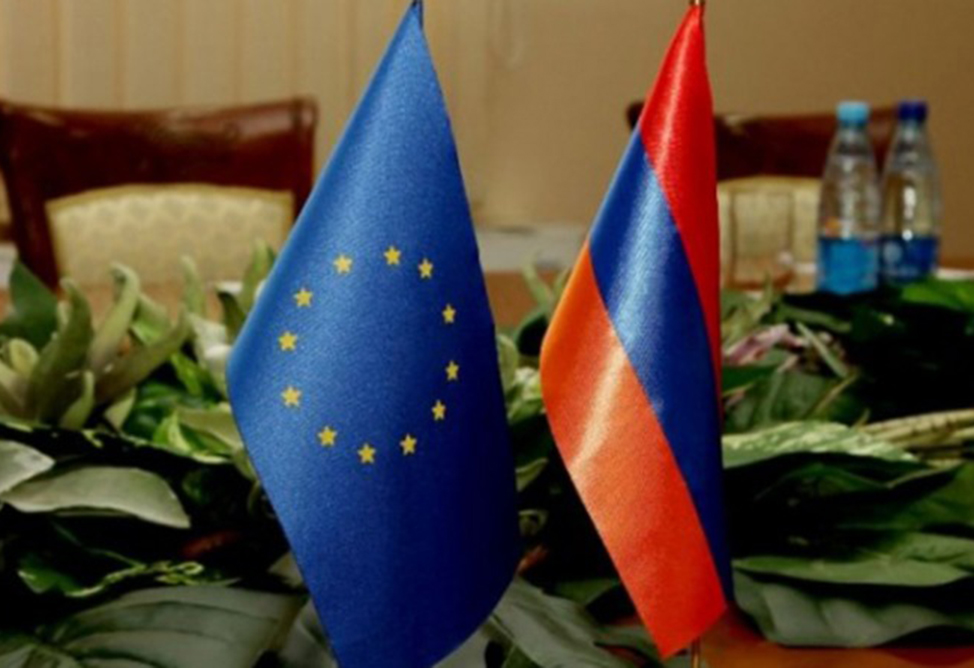
YEREVAN, September 3. /ARKA/. The abolition of tariffs on Armenian exports to the EU creates an opportunity to diversify supplies, but will not lose the Russian market. This was stated by Arsen Ghazaryan, Chairman of the Union of Industrialists and Entrepreneurs of Armenia (UIEA), in response to a question from ARKA news agency.
Commenting on the EU Council's decision to support the abolition of tariffs for approximately 80% of Armenia's exports to the EU, Ghazaryan noted that this creates the necessary legal framework.
"But to export processed or fresh agricultural products, especially to the European market, we need to find partners there. Now the ball is in our court," Ghazaryan said on the sidelines of the Armenian-Turkish business forum taking place in Yerevan.
According to him, Armenian entrepreneurs need to quickly establish relationships with retail chains and European distributors to gain entry into this market.
"The European market is oversaturated and extremely competitive. Yes, in terms of price, it's more expensive than the Russian market, but there's also the transportation factor: shipping to Europe will be somewhat more expensive than to Russia," he noted.
According to Kazaryan, much now depends on the Armenian entrepreneurs themselves, who need to find partners and initially be prepared to accept lower profits for the sake of export diversification.
"I am definitely in favor of diversification. But we've been talking about diversification for 30 years and still haven't achieved it. Today, the European Union offers this opportunity, and we must seize it immediately," the head of the Union of Armenian Producers of Armenian Food and Agriculture said.
He noted that some Armenian products face compliance issues, but believes these issues can be quickly resolved.
At the same time, Kazaryan stated that developing exports to the EU does not mean abandoning the Russian market.
"I don't want to forget the Russian market, and we won't forget it, because it's the largest solvent consumer market that meets our standards," he said.
Responding to a question about whether the European or Turkish markets could eventually completely replace the Russian one, Kazaryan noted that the Russian market for Armenian businesses has developed historically.
"The Russian market didn't develop over 35 years of independence. It developed historically—we were part of the unified space of the Soviet Union. It will take time to develop a similar position in the European market," he said.
According to the head of the Union of Armenian Consumers and Consumers, the European market won't be able to completely replace the Russian one, but there's no need for that.
"I believe we won't lose the Russian market. By slightly adjusting our technical standards and requirements to comply with Rospotrebnadzor, we won't lose control of this market. We must operate in both the European and Russian markets," Kazaryan stated.
Restrictions on the supply of Armenian products to Russia
Since the end of May, Russia has been gradually introducing restrictions on the supply of certain products from Armenia, citing violations of phytosanitary requirements. The restrictions include flowers, mineral water, certain beverages and alcoholic beverages, vegetables, fruits, berries, grapes, potatoes, dried fruits, and later, live fish and fish products, as well as dairy products.
The restrictions also include a ban on the transit of products of Armenian origin through Russia to other EAEU countries.
Commenting on the EU Council's decision to support the abolition of tariffs for approximately 80% of Armenia's exports to the EU, Ghazaryan noted that this creates the necessary legal framework.
"But to export processed or fresh agricultural products, especially to the European market, we need to find partners there. Now the ball is in our court," Ghazaryan said on the sidelines of the Armenian-Turkish business forum taking place in Yerevan.
According to him, Armenian entrepreneurs need to quickly establish relationships with retail chains and European distributors to gain entry into this market.
"The European market is oversaturated and extremely competitive. Yes, in terms of price, it's more expensive than the Russian market, but there's also the transportation factor: shipping to Europe will be somewhat more expensive than to Russia," he noted.
According to Kazaryan, much now depends on the Armenian entrepreneurs themselves, who need to find partners and initially be prepared to accept lower profits for the sake of export diversification.
"I am definitely in favor of diversification. But we've been talking about diversification for 30 years and still haven't achieved it. Today, the European Union offers this opportunity, and we must seize it immediately," the head of the Union of Armenian Producers of Armenian Food and Agriculture said.
He noted that some Armenian products face compliance issues, but believes these issues can be quickly resolved.
At the same time, Kazaryan stated that developing exports to the EU does not mean abandoning the Russian market.
"I don't want to forget the Russian market, and we won't forget it, because it's the largest solvent consumer market that meets our standards," he said.
Responding to a question about whether the European or Turkish markets could eventually completely replace the Russian one, Kazaryan noted that the Russian market for Armenian businesses has developed historically.
"The Russian market didn't develop over 35 years of independence. It developed historically—we were part of the unified space of the Soviet Union. It will take time to develop a similar position in the European market," he said.
According to the head of the Union of Armenian Consumers and Consumers, the European market won't be able to completely replace the Russian one, but there's no need for that.
"I believe we won't lose the Russian market. By slightly adjusting our technical standards and requirements to comply with Rospotrebnadzor, we won't lose control of this market. We must operate in both the European and Russian markets," Kazaryan stated.
Restrictions on the supply of Armenian products to Russia
Since the end of May, Russia has been gradually introducing restrictions on the supply of certain products from Armenia, citing violations of phytosanitary requirements. The restrictions include flowers, mineral water, certain beverages and alcoholic beverages, vegetables, fruits, berries, grapes, potatoes, dried fruits, and later, live fish and fish products, as well as dairy products.
The restrictions also include a ban on the transit of products of Armenian origin through Russia to other EAEU countries.
