

ARKA Armenia Weekly: Highlights of the Week: Politics, Economy and Markets (March 30 – April 5, 2026)
YEREVAN, April 6. /ARKA/. The ARKA News Agency offers a summary of the week's significant events.
SUMMARY
The primary external development last week was the meeting between Nikol Pashinyan and Vladimir Putin on April 1, which marked a shift toward a more assertive and practical Russian agenda regarding Armenia. Key topics affecting business and markets included: rail connectivity with Russia, the challenges of holding simultaneous memberships in the EU and the EAEU, the cost of Russian gas, the selection of a new nuclear power plant model, and potential changes in Moscow's economic ties with Yerevan. Concerns about trade, logistics, and air travel risks if Armenia aligns more closely with the EU added to the pressure.
On the domestic front, signals are mixed: inflation rose to 4.5% in March, with food prices increasing at a faster rate than the overall index. Meanwhile, the World Bank has approved $200 million to aid in the transition to a more competitive and globally integrated economy. For businesses, this indicates the need to sustain fundamental resilience amid escalating external economic uncertainties.
POLITICS
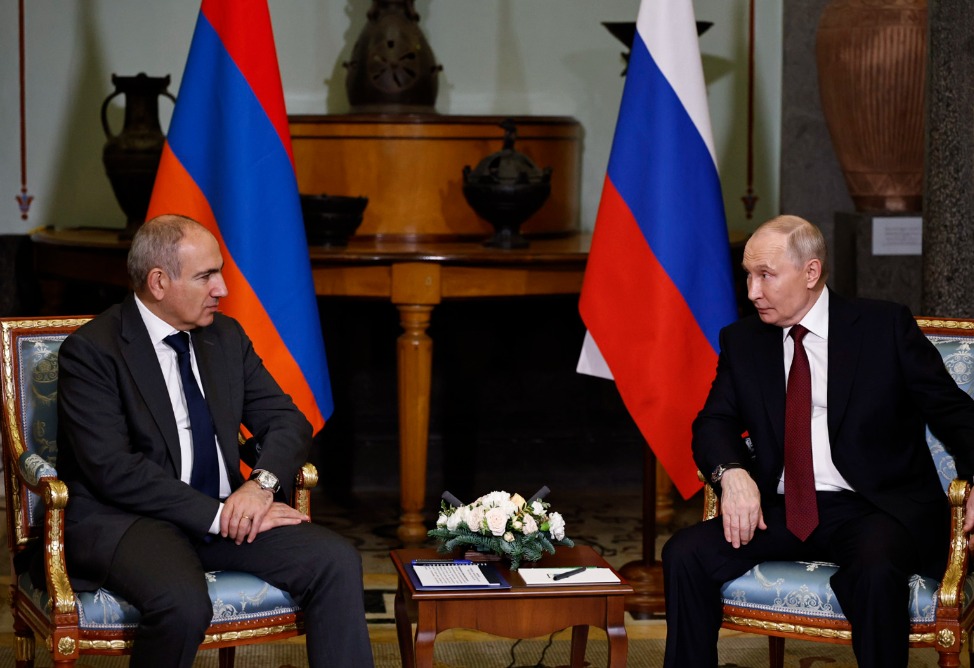
The significant political and economic highlight of the week was the meeting between Pashinyan and Putin at the Kremlin on April 1. Several critical issues concerning Armenia were thrust into the public eye: rail freight transport with Russia, the legal feasibility of ending the railway management concession without any intention to pursue this option, a definitive statement on the impossibility of holding simultaneous memberships in the EU and the EAEU, along with the specifics of Armenia's transport, energy, and economic connections with Russia and the EAEU. For the market, this indicates a shift towards a more vigorous discussion regarding the terms of this connection. In the practical aspects of the week, the fundamental parameters of foreign economic and energy reliance were delineated.
The price of Russian gas for Armenia remains at $177.5 per thousand cubic meters, while discussions about a new nuclear power plant are still ongoing, not only with Russia but also with other partners. This transition moves energy from being a political matter to a category of medium-term economic decisions that directly affect business expenses and energy security. Statements made by Alexey Overchuk from April 2–5 added more urgency to the agenda. The Russian side cautioned about a potential shift in the economic relationship with Armenia if Yerevan continues its approach towards the EU.
The current trade structure was presented as evidence: since 2015, Armenia's exports to the Eurasian Economic Union (EAEU) have surged 12.5 times, to the EU 1.53 times, and to the US 2.2 times. The risk of halting direct air travel with Russia if Armenia joins the EU was particularly emphasized, as Russia currently has no air travel agreements with EU nations. For businesses, this translates to increased potential expenses for trade, logistics, and cross-border movement.
On the domestic political agenda, this week solidified the pre-election configuration of power. On March 30, following internal procedures within the Civil Contract party, Pashinyan was nominated as a candidate for prime minister, and on April 4, the party officially approved his candidacy and electoral list for the June 7 parliamentary elections. This reduces uncertainty surrounding the power configuration in the pre-election period and increases the likelihood that the economic course will be presented as one of continuity rather than reassembly.
ECONOMY AND MACRO SIGNALS
The main domestic macro signal of the week was accelerating inflation. In March 2026, 12-month inflation in Armenia amounted to 4.5%, and monthly price growth reached 0.7%. Prices for food products and non-alcoholic beverages increased by 7.8% year-on-year and 1.8% month-on-month. Pressure on consumer demand is increasing primarily through the basket of everyday consumption items, rather than through a broad price increase across all categories.
Gas and nuclear energy were on the macroeconomic agenda this week. Moscow publicly reminded Armenia of the price of Russian gas, and Yerevan confirmed that a new nuclear power plant is being discussed with Russia and other international partners. At the same time, a warning was issued that, without a decision on the construction of a new plant by the end of 2026, Armenia could face energy shortages and more expensive electricity imports in the foreseeable future. For the economy, this means that the energy balance is becoming a key factor in medium-term business costs.
On a positive note regarding the macro agenda, the World Bank has sanctioned a $200 million initiative aimed at aiding Armenia's shift towards a more competitive and globally integrated economy, while also promoting responsible emissions management. This serves as a crucial signal for investors and businesses: despite the escalating harsh rhetoric in foreign policy, Yerevan continues to have access to long-term international resources necessary for the structural transformation of its economy.
Nevertheless, the short-term price risks linked to regional logistics have not yet fully come to fruition. Gegham Gevorgyan, the head of the Commission for the Protection of Competition and Consumer Interests, noted that there hasn't been a significant price surge due to the conflict in Iran, but the rising costs of logistics could potentially lead to future price hikes. This situation makes the upcoming import cycle a vital leading indicator for domestic price trends.
BUSINESS AND CORPORATE SECTOR
In the banking sector, Ameriabank's accolade as the top GTFP issuing bank in the Caucasus region at the IFC Awards 2026 ceremony represents a noteworthy corporate signal. For Armenian enterprises, this recognition is significant not just for its reputational value: access to international trade finance channels remains essential in a more challenging external landscape and amid the potential reconfiguration of trade routes.
Another indication of ongoing banking activity in the domestic market is VTB (Armenia)'s introduction of a simplified car loan program in the primary market, collaborating with over 50 dealers. This reflects the banking sector's willingness to broaden its product offerings even in the face of increasing external risks.
In terms of infrastructure, water continues to be a critical economic element for businesses. In a discussion with Newsarmenia, the head of Veolia Jur connected alterations in the water supply schedule, water shortages, and the necessity for 11 billion drams in investments. For urban development and industry, this indicates that public infrastructure is becoming an increasingly significant factor in the cost and quality of business operations.
MARKETS AND FINANCE
The local debt market has continued its development. AMX has announced the listing of ArmSwissBank bonds, with the first trading day set for April 2, 2026, and a maturity date of February 4, 2029. Additionally, Ardshinbank has stepped in as a market maker for these securities. This move not only marks the introduction of a new issue in the capital market but also fosters conditions that enhance secondary liquidity.
In another development this week, preparations are underway for a new regulatory framework in the energy sector. Armenia is set to introduce licensing for electricity storage activities. This is a crucial indicator for investors, signaling that the market is gearing up for a more adaptable energy system architecture, where energy storage will be recognized as a distinct regulated segment.
At the same time, the Metsamor Nuclear Power Plant was temporarily taken offline on April 1 for about five months as part of its extension program. While this does not immediately indicate a shortage, it does heighten the focus on reserve capacity, the costs associated with compensating for lost generation, and the urgency of decisions regarding new baseload capacity.
In the consumer market leading up to Easter, the regulator has flagged new batches of eggs that have labeling and quality issues. This is a noteworthy signal, especially when considered alongside March statistics: in the category of "dairy, cheese, and egg," prices have surged by 12.8% year-on-year, with eggs alone seeing a 30.1% year-on-year increase and a 7.1% rise month-on-month. For the retail market, this combination of escalating prices and stricter quality controls renders the food segment particularly vulnerable in the weeks ahead.
WHAT DOES THIS MEAN?
The Russian situation has emerged as the primary external factor of the week: it has evolved from mere statements to concrete conditions affecting trade, transportation, aviation, and energy.
The domestic macroeconomic environment remains largely stable due to international backing and ongoing business activities, although food inflation is once again intensifying pressure on consumers.
Energy is increasingly at the crossroads of geopolitics and economics: fluctuations in gas prices, the selection of a new nuclear power plant design, the extension of an existing facility, and the management of storage sites are now directly influencing business outlooks.
In spite of the challenging external circumstances, the local financial market continues to grow institutionally through new listings and mechanisms for liquidity support.
RISKS OF THE WEEK
Any fresh announcements along the Armenia-Russia-EU-EAEU corridor could have a direct effect on business expectations related to trade, logistics, and air travel.
The gas situation and discussions surrounding the new nuclear power plant will remain sensitive to cost implications and energy security concerns. Rising food inflation and new irregularities in the egg market could heighten consumer anxiety and draw regulators' scrutiny towards retail.
The increase in logistics costs to Iran may show delayed effects, contributing to rising import prices.
With the endorsement of Pashinyan's candidacy and the Civil Contract party list, the election campaign could further politicize the economic landscape.-0-