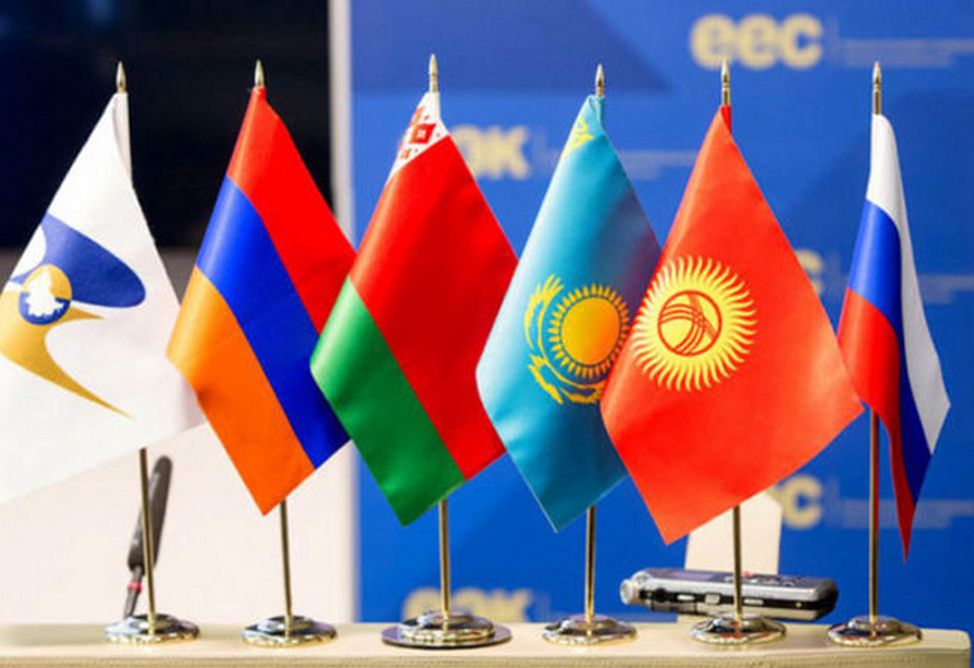


Papoyan: Russian gas price hike for Armenia unlikely due to EAEU importance
04.04.2026,
22:58
Armenian Economy Minister Gevorg Papoyan believes that the price of Russian gas for the country will not increase.
YEREVAN, April 6. /ARKA/. Armenian Economy Minister Gevorg Papoyan believes that the price of Russian gas for the country will not increase.
"Gas prices will not increase. This is my opinion, as Armenia is very necessary and important for the EAEU," Papoyan told reporters on Saturday on the sidelines of the 8th extraordinary congress of the Civil Contract party.
Russian President Vladimir Putin told Armenian Prime Minister Nikol Pashinyan at a meeting in Moscow on April 1 that Russian gas is cheaper for Armenia than the same fuel in Europe, noting that energy prices today, "for example, gas in Europe is somewhere around $600 per thousand cubic meters, while Russia sells gas to Armenia for $177.5 per thousand cubic meters." Papoyan noted that "the price of $175 for Russian gas for Armenia is not something we can afford."
Responding to a question about the possible economic consequences of Armenia's withdrawal from the EAEU and the CSTO, the minister stated that the country must evaluate the benefits it receives.
"If Armenia doesn't receive these benefits, why should it remain in this union?" he said, adding that in such a case, the process of joining other unions could be accelerated.
Papoyan also wondered about Armenia's situation before joining the EAEU.
"Nothing. It's not like Armenia's economy experienced some kind of astronomical growth after joining the EAEU. Let me remind you that from 2013 to 2016, economic growth was 1-2%. In 2016, there wasn't even any growth. That is, "Positive developments in the EAEU began after this year and, in my opinion, were not related to the EAEU, but were caused by developments in our economy," the minister said.
According to official statistics, Armenia's economic growth from 2013 to 2015 fell short of the state budget target. Thus, Armenia's GDP growth in 2013 was 3.3% instead of the budgeted 6.2%; in 2014, it was 3.5% instead of 5.2%; and in 2015, it was 3% instead of 4.1%. Armenia ended 2016 with economic growth of 0.2%, compared to the planned 2.2%. This low figure was due to a decline in the construction sector of 11.3% and in the agricultural sector of 5.8%. Growth was supported by industry, including energy (growth of 5.1%) and trade and services (growth of 4%). Papoyan cited the example of countries like Georgia, Uzbekistan, and Azerbaijan, which work with Russia without being members of the EAEU.
"Ultimately, Armenia contributes greatly to the EAEU. Many goods needed by the EAEU are shipped through Armenia to the EAEU. Let's not underestimate our importance. I know full well why we matter," the Minister of Economy added.
"Gas prices will not increase. This is my opinion, as Armenia is very necessary and important for the EAEU," Papoyan told reporters on Saturday on the sidelines of the 8th extraordinary congress of the Civil Contract party.
Russian President Vladimir Putin told Armenian Prime Minister Nikol Pashinyan at a meeting in Moscow on April 1 that Russian gas is cheaper for Armenia than the same fuel in Europe, noting that energy prices today, "for example, gas in Europe is somewhere around $600 per thousand cubic meters, while Russia sells gas to Armenia for $177.5 per thousand cubic meters." Papoyan noted that "the price of $175 for Russian gas for Armenia is not something we can afford."
Responding to a question about the possible economic consequences of Armenia's withdrawal from the EAEU and the CSTO, the minister stated that the country must evaluate the benefits it receives.
"If Armenia doesn't receive these benefits, why should it remain in this union?" he said, adding that in such a case, the process of joining other unions could be accelerated.
Papoyan also wondered about Armenia's situation before joining the EAEU.
"Nothing. It's not like Armenia's economy experienced some kind of astronomical growth after joining the EAEU. Let me remind you that from 2013 to 2016, economic growth was 1-2%. In 2016, there wasn't even any growth. That is, "Positive developments in the EAEU began after this year and, in my opinion, were not related to the EAEU, but were caused by developments in our economy," the minister said.
According to official statistics, Armenia's economic growth from 2013 to 2015 fell short of the state budget target. Thus, Armenia's GDP growth in 2013 was 3.3% instead of the budgeted 6.2%; in 2014, it was 3.5% instead of 5.2%; and in 2015, it was 3% instead of 4.1%. Armenia ended 2016 with economic growth of 0.2%, compared to the planned 2.2%. This low figure was due to a decline in the construction sector of 11.3% and in the agricultural sector of 5.8%. Growth was supported by industry, including energy (growth of 5.1%) and trade and services (growth of 4%). Papoyan cited the example of countries like Georgia, Uzbekistan, and Azerbaijan, which work with Russia without being members of the EAEU.
"Ultimately, Armenia contributes greatly to the EAEU. Many goods needed by the EAEU are shipped through Armenia to the EAEU. Let's not underestimate our importance. I know full well why we matter," the Minister of Economy added.