

Armenia: Ready for Foreign Direct Investment, IFC
YEREVAN, October 19, /ARKA/. What is interesting about Armenia is that the country has two contrasting sides. While the country’s mountains stand tall and resolute, they are no less vulnerable to floods, landslides, droughts, and wildfires, underlining the fact that change is constant. However, what counts is to be resilient in the face of change.
In this context, the COVID-19 pandemic has radically altered the investment landscape globally. This has been especially challenging for Armenia, where since 2008, attracting foreign direct investment (FDI) has already been difficult due to the global economic crisis, the recession in Russia—the country’s main trading partner—and regulatory and institutional issues. The pandemic proved to be a further deterrent for both foreign and domestic investors.
On the flip side, despite the unprecedented hurdles, the crisis offers a rare opportunity for economies like Armenia to rethink and realign its priorities to create a robust roadmap.
We at IFC believe that attracting FDI through targeted investment promotion and measures will be key to improving investor confidence in Armenia. For that, it will be vital to strengthen the government’s ability to attract and retain FDI. Moreover, continuing reforms will be essential to provide new opportunities for private sector growth.
An enabling business environment is key to encourage investment and stimulate economic growth. In view of this, the groundwork was laid in 2019, when the Armenian government approached IFC for support to set up a new agency and develop its capacity as a national investment promotion agency.
Given its global experience, IFC helped establish Enterprise Armenia (EA, the Investment Support Center) in December 2019. IFC’s Armenia Economic Growth Project—delivered in partnership with the UK Government’s Good Governance Fund—aims to help the agency attract, grow, and retain foreign investment.
Initially, to support Enterprise Armenia’s investment promotion capabilities, we focused on five areas. First, we conducted a baseline institutional assessment of the agency’s needs in terms of operating both during COVID-19 as well as during the recovery phase. Second, based on global best practices, IFC helped draft a new legal charter for Enterprise Armenia, which sets out its mandate and objectives while establishing the agency’s legal and structural identity.
Third, we set out a roadmap for capacity building, which involved developing a structured plan to put in place a skilled workforce capable of serving both overseas and domestic investors. Fourth, we created an investor aftercare services plan to support foreign investors and help them adapt to a new economic environment. Finally, we conducted sector reviews and developed value propositions to support the agency’s investor outreach programs for select competitive sub-sectors of the economy.
Starting March 2021, Enterprise Armenia has been providing aftercare services to FDIs—a first for any agency in the country. For many countries, reinvestments by existing foreign investors is often a large source of new FDI, and aftercare services are one of the key mechanisms used worldwide to grow reinvestment levels. Apart from attracting FDI, leveraging aftercare services can help create jobs and grow the national economy.
Levon Ohanesyan, CEO of Enterprise Armenia, said that since the launch of the Aftercare Service, the agency staff has worked with around 80 foreign investors, and they plan to serve more than 100 foreign investors by the end of 2021.
Since early 2020, the agency has been on a “COVID-19 crisis response mode,” supporting investors. While we advised the agency on how to help investors tide over the crisis, Enterprise Armenia has provided valuable resource and advice to over 600 businessmen and investors over the last year.
Now, with several investment projects in the pipeline, Enterprise Armenia is delivering a wide range of services. These include working with Armenia’s diplomatic representatives in target overseas markets that can attract more investment.
Broadly, according to an economic sector analysis, the promising sectors for FDI in the country include information and communication technologies, healthcare—with a focus on pharmaceuticals, and the agribusiness sector. With the current level of FDI in Armenia at $499 million, moving ahead, the agency’s goal is to contribute to private sector development by helping create stronger and more targeted government support services for investors. This will help create a favorable market for investment, accelerating the country’s economic recovery.
Until then, Armenia—just like its majestic mountains—is ready to absorb any change that comes its way and emerge resilient.
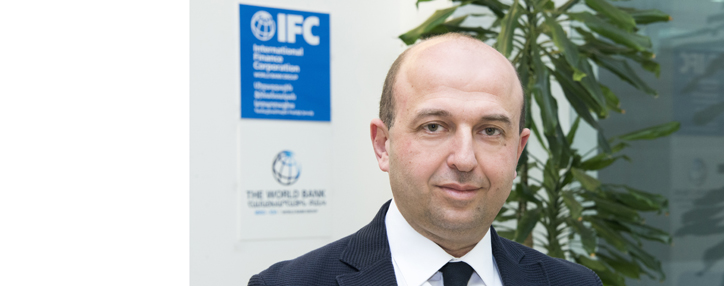
Arsen Nazaryan, IFC’s Armenia Economic Growth Project Lead
The opinion of the author may not coincide with the position of the editorial board of ARKA. -0-