

Armenia will allow redomiciliation of foreign companies
20.10.2016,
16:33
The Armenian government will ask the parliament to approve a set of bills allowing redomicilation (relocation) of foreign companies as a way to attract new foreign investors, Suren Karayan, the deputy minister of economic development and investment, said today when presenting a package of amendments to the relating laws.
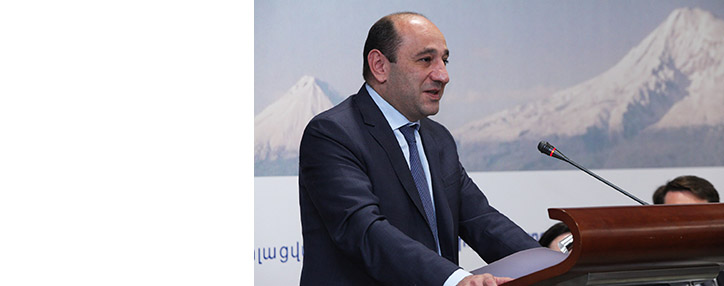
YEREVAN, October 20. /ARKA/. The Armenian government will ask the parliament to approve a set of bills allowing redomicilation (relocation) of foreign companies as a way to attract new foreign investors, Suren Karayan, the deputy minister of economic development and investment, said today when presenting a package of amendments to the relating laws.
He said the government has approved a set of amendments to the relating Civil Code and a number of other related laws which are necessary to allow the re-domiciliation of foreign companies.
Corporate re-domiciliation is the process by which a company moves its 'domicile' (or place of incorporation) from one jurisdiction to another by changing the country under whose laws it is registered or incorporated, whilst maintaining the same legal identity.
"Re-domiciliation of foreign companies is quite effective in many countries allowing to attract foreign investment ", - said Karayan.
According to the minister, this practice is applied in various EU countries, in particular Austria, Belgium, Ireland and Latvia. -0-
He said the government has approved a set of amendments to the relating Civil Code and a number of other related laws which are necessary to allow the re-domiciliation of foreign companies.
Corporate re-domiciliation is the process by which a company moves its 'domicile' (or place of incorporation) from one jurisdiction to another by changing the country under whose laws it is registered or incorporated, whilst maintaining the same legal identity.
"Re-domiciliation of foreign companies is quite effective in many countries allowing to attract foreign investment ", - said Karayan.
According to the minister, this practice is applied in various EU countries, in particular Austria, Belgium, Ireland and Latvia. -0-