


"AI Qez Ban": How Yerevan Discussed What and How to Learn in the AI Era
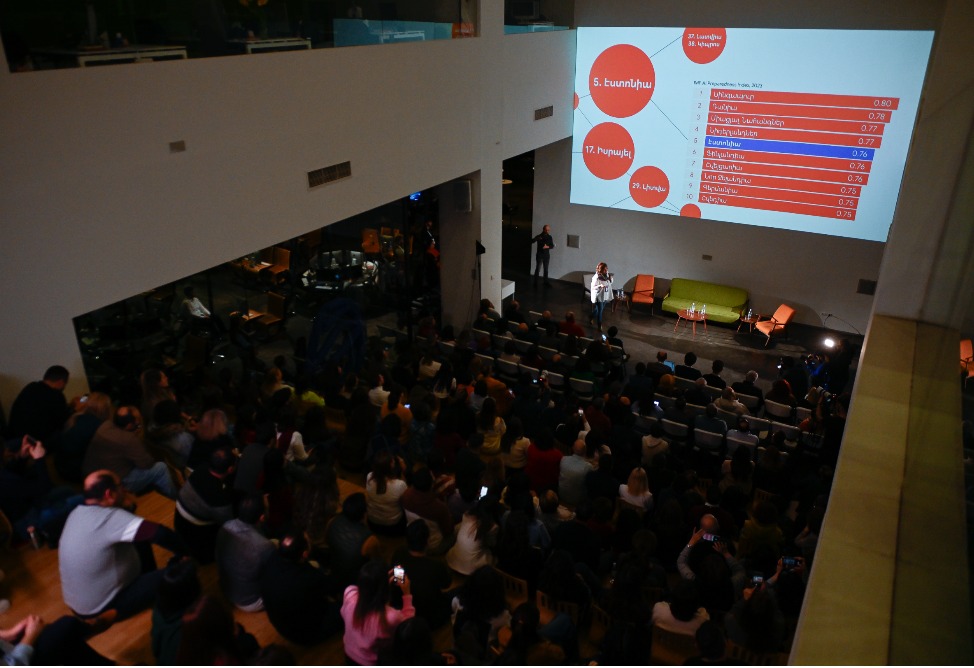
YEREVAN, January 29. /ARKA/. The first offline event of the "AI Qez Ban" community took place in Yerevan, bringing together participants of the reArmenia Academy's educational project, business representatives, and AI experts. Participants discussed the role of AI in Armenia's development, educational prospects, and practical steps to adapt to technological change.
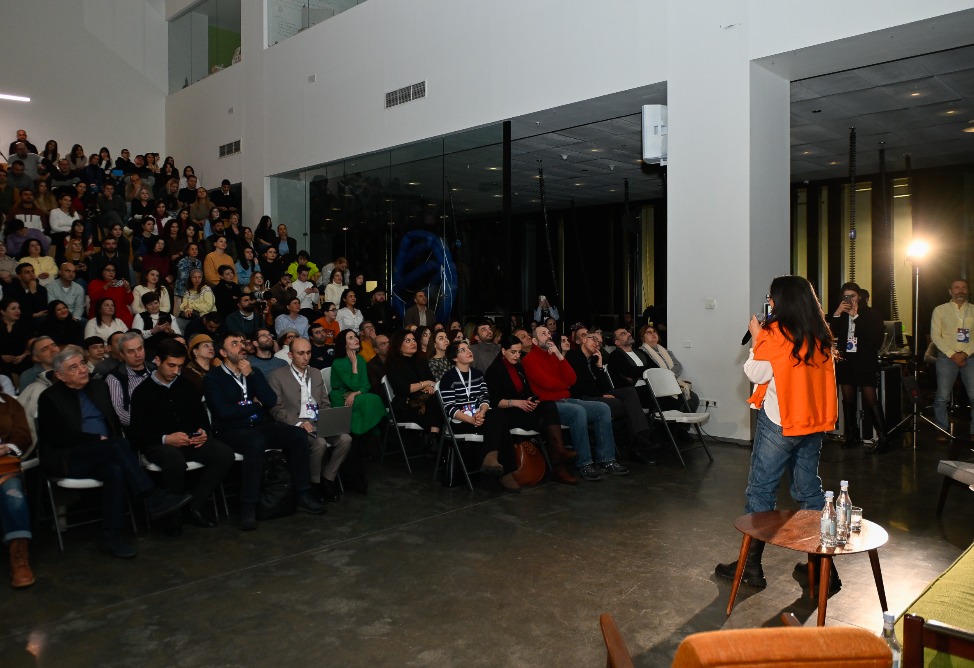
"This is essentially the first event of the "AI Qez Ban" community. Today, we gathered for the first time to get to know each other, get closer, and imagine our next steps," said reArmenia Foundation Director Gevorg Poghosyan.
How it all began...
According to Poghosyan, the reArmenia Foundation's mission is to strengthen and unite Armenians. The reArmenia platform, created in 2021, pursued the same goal. Over time, it became clear that education was the best way to achieve this.
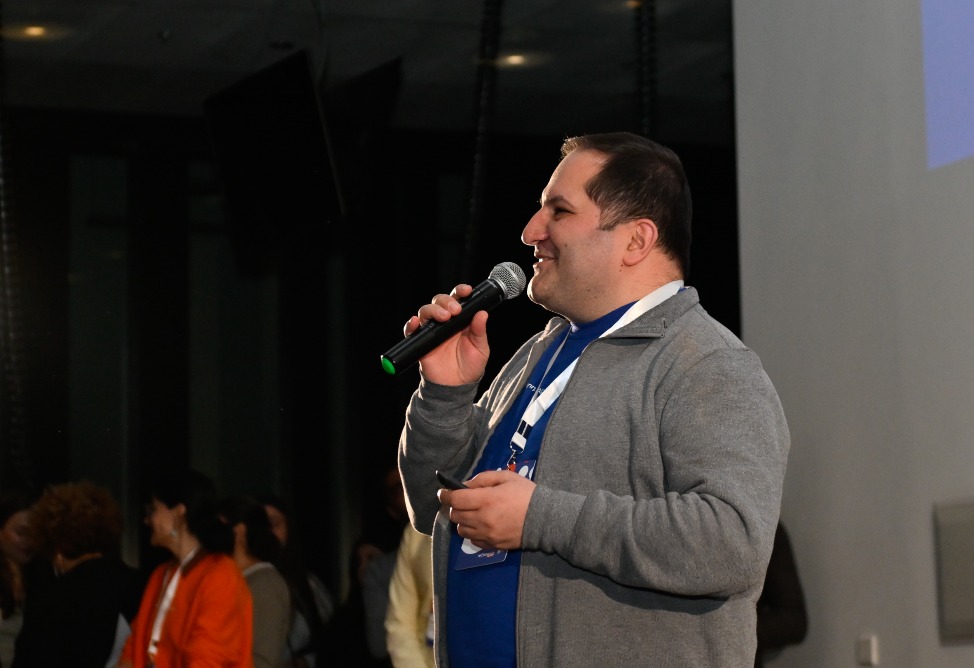
reArmenia Academy Director Rebeka Hakobyan explained that the "AI Qez Ban" educational project has been running for a little over six months—the first course began on March 19, 2025. On October 28, 2025, the reArmenia Academy separated from the ReArmenia Foundation and, as an educational and technology company, provides services to Armenians and exports them to other countries.
Participants in the courses include both individuals and organizations. Collaboration is also underway with universities.
"We have created a unique model, where the reArmenia Foundation is the company's main shareholder, and the remaining shareholders are Armenian and international investors. We currently have 14 shareholders. "We've currently attracted $670,000 in investment, valuing the company at $10 million," she said in response to a question from ARKA news agency.
Anait Vardanyan, coordinator of the "AI Qez Ban" training program, explained that the project's distinguishing feature is the ability to tailor courses to students' needs, both in terms of format and methodology.
"We have Start courses for those new to AI, LevelUp courses for those wanting to take their existing knowledge to the next level, and Pro courses for specific specialists, including AI marketers or AI teachers," she noted.
According to Vardanyan, the training process involves solving various real-world problems while simultaneously acquiring a wealth of new knowledge
...and where to go next
According to Gevorg Poghosyan, the project's goal is to train at least 1 million Armenians within five years. He reported that within six months, a community of approximately 6,000 people has already formed, including participants in paid courses and free webinars. Classes are offered online, in-person, and in a hybrid format.
Rebeka Hakobyan is confident that Armenia can become a country exporting education and educational technologies.

In this regard, she announced that cooperation with India, a country ranked among the top ten countries in the world in terms of AI adaptation indices, will begin as early as February 2026.
"We will collaborate with one of India's oldest universities and conduct AI literacy courses in English for Indian audiences." This in itself proves that Armenia can create highly successful projects and technologies that we can export, thereby strengthening Armenia's role as a country of AI, AI technologies, AI education, and, in general, a country transforming education," she emphasized.
Keep up with AI
Ameriabank's Head of Human Resources, Anna Vardanyants, believes it's crucial that AI knowledge be accessible to everyone, as it's a crucial tool not only for organizational success but also for the individual success of each individual.

According to her, AI today allows for the rapid automation of technical, routine work, giving people more freedom and the opportunity to focus on creative thinking, creative work, human emotions, relationships, effective interaction, and creativity.
At the same time, she is confident that AI will never replace humans, but will become a new mechanism for human progress.
"AI helps people ask questions and understand that there are no right or wrong questions. It's curiosity, a boundless ability to understand the world. This is the most important quality that can drive further human progress," she emphasized. Vardanyan said that Ameriabank is one of the first organizations to integrate AI as an educational program into its mandatory programs.
"The bank is actively implementing AI, conducting large-scale mass training programs. We implement programs for both managers and employees, for the branch network, as well as for specialists within various technology and product teams," she explained.
Furthermore, she noted that Ameriabank has AI pioneers and AI investors—people who share their experience and projects, demonstrating how AI can help automate and optimize work.
"We also have other interesting projects that we are implementing jointly with reArmenia. We are currently discussing several projects to create AI agents that will help optimize various simple processes, for example, in HR, and thereby facilitate human labor," she said.
Noting that an organization's effectiveness is measured by how quickly and flexibly it adapts to change, Vardanyan said Ameriabank is already working to retrain its employees and prepare them for the skills of the future.
What is "good" and how to improve "bad"?
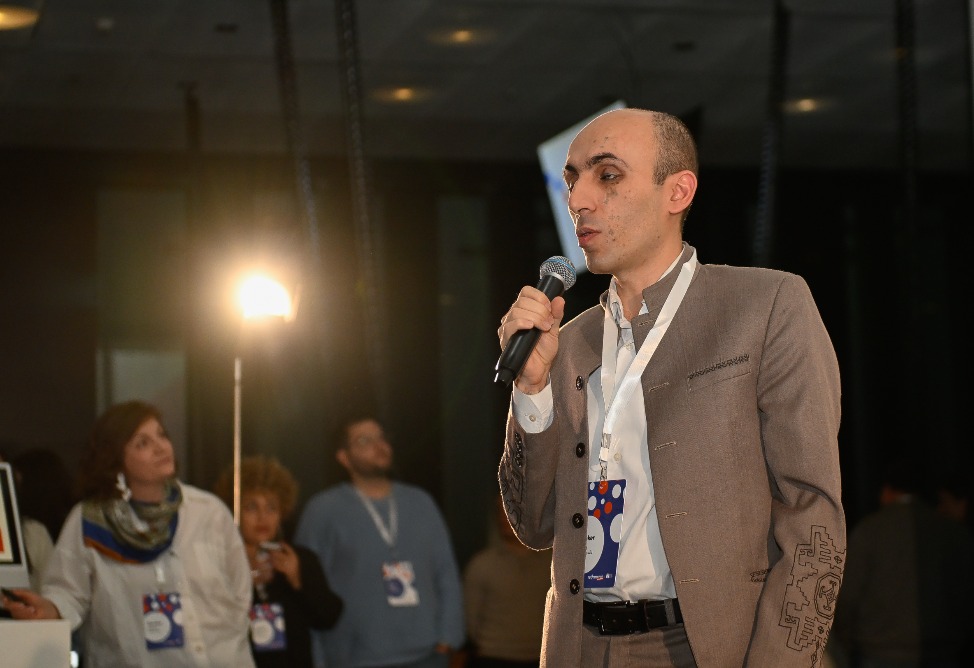
Artak Beglaryan, Partnerships Lead at reArmenia Academy, presented some data on Armenia.
According to Coursera's AI Maturity Index, which ranks countries by their level of readiness for AI implementation, Armenia ranks 64th, while WIPO's Global Innovation Index ranks countries by their innovation potential.
According to OECD data, Armenia ranks first in the Central Asia and South Caucasus region for the number of AI publications per capita.
The IT sector's share of GDP already stands at approximately 7%, and its annual turnover has exceeded 1 trillion drams. Moreover, the share of AI in the IT sector is growing rapidly. At the same time, Armenia still lacks a national AI strategy, unlike 77 countries, including Azerbaijan and Georgia, which ranks it 101st out of 138 countries in the Global Index on Responsible AI.
Beglaryan also presented a roadmap for achieving success in AI.
1. Creating AI models, which is the deepest and most complex scientific level.
2. Creating AI tools and delivering AI products to international markets, which many companies are already doing.
3. Training users in the use of AI tools, which offers significant potential.
Briefly – about the important things

The panelists discussed how people can organize their daily lives and development processes to keep up with AI and all the latest developments.
Aram Pakhchanyan, Co-Founder of the Ayb Educational Foundation
- To build the right AI training path, you need to be prepared to "switch on your brain" and think along with the AI;
- AI can be a subordinate, a partner, but never a leader;
- If you rely on AI to do everything for you, at some point it will start dictating what you do, and you will never become the best – you will become average;
- AI as an assistant is great, but you need to understand that it is the human who makes the decisions.
Anna Kondzhoryan, Head of Corporate Culture at Amio Bank
- Owning AI means being bold with AI;
- AI creativity skills – seeing trends, finding connections between seemingly incompatible things, and formulating questions correctly.
Anna Vardanyants, Head of Human Resources at Ameriabank
- It's important to disseminate AI knowledge and experience, discuss the dangers and benefits, establish ethical standards and logic, and dispel fears;
- The key to our success is continuous and accessible learning without any limitations;
- There will come a time when AI will become part of everyday life, as commonplace as a smartphone is today;
- Progress begins when you dare to ask questions, and AI constantly forces people to ask questions.
Susanna Shamakhyan, Executive Director of the FAST Foundation
- You need to be able to ask the right questions to get the right answers and distinguish myth from reality;
- If you can't think, AI won't give you anything, and vice versa, AI can help you if you clearly know what you need.